Are We Losing Our Nerve?
Change is hard. The answer is to make conscious choices about what comes next, not retreat from it.

Editorial
There is something strange about this week. The technology keeps giving us reasons to be ambitious about AI, while the institutions responsible for turning it into an economy seem increasingly unsure what to do next.
This week Jensen Huang resigned, Anthropic set IPO terms below earlier expectations, and Southeast Asia began pausing data centers. Meanwhile, Ethan Mollick describes Claude Fable 5.2 as “Jagged AGI.”
The mood this week suggests that boards, investors, companies and politicians are each losing their nerve at the moment the technology most rewards it.
Nerve is the willingness to make a considered commitment before the evidence is complete. Kyle Harrison offers a good test for distinguishing nerve from gambling: a real venture is positive-sum and patient, while a bet needs someone else to lose and pays off fast. Each of this week’s stories is a test of nerve.
The Board Test
Start with Jensen. My instinct is that, despite his behavior, he should not have resigned, and the board should not have accepted it. Nvidia is assembling the computing capacity a new economy depends on, and leadership is worth most in exactly that kind of transition. Nvidia has appointed Colette Kress interim CEO while it searches for a permanent successor. One able to continue at Jensen’s pace will be hard to find, especially without his involvement.
I am not defending infidelity, but it had little bearing on how he did his job. The strongest case against him is the Megaspeed reporting from Bloomberg and Semafor, which you can read below. It raises real questions about how Nvidia handled a smuggling investigation involving Alice Huang’s company. But no one has accused Jensen of breaking the law, Nvidia says its general counsel did not know about the relationship when he contacted officials, and nothing yet shows the relationship changed how he ran the company.
The board has commissioned an independent investigation, and we do not know everything it knows. If it finds he shaped Nvidia’s conduct to protect a personal relationship, I would change my view. Until then, acting first treats a scandal as a verdict. Boards owe shareholders both accountability and continuity. With roughly 60 direct reports and no identified successor, Nvidia’s board had already neglected the second. Accepting his resignation before the facts are in, at a cost of more than $855 billion in market value, serves neither.
The Investor Test
Anthropic presents a different test. Earlier valuation expectations reached $2 trillion; the announced IPO terms imply up to about $1.4 trillion, with the raise itself between $64 billion and $74 billion depending on whether the optional shares are taken up. Reuters’ reporting captures both the enthusiasm for its growth and the doubts about the cash it will eventually generate. That is a fall in mood. It is not automatically a fall in the business. Even at $1.4 trillion, Anthropic would be worth far more than the $952 billion of its spring funding round, at about 17 times its $81 billion revenue run rate.
The serious bear case is arithmetic, not mood. Packy McCormick notes that Anthropic has committed $900.9 billion to compute through 2045, and that producers historically captured only about 2.2% of the social surplus their technologies created.
But I don’t think the opportunity has deteriorated as much as the price. For disclosure, I have asked my broker to buy shares in the offering.
The wider venture data shows where nerve is really missing. US Series A funding is up about 60% through October, to $42 billion, without a comparable increase in deal counts. Firms raising a fourth fund or later captured 88.2% of US venture fundraising this year; first-time funds received 4.5%. Dan Gray calls the result a “black box,” an industry clustering around companies everyone already agrees on.
Plentiful capital crowding into fewer companies is a loss of nerve and a shift to de-risked certainty.
The Company Test
In Mollick’s tests, Fable 5.2 designed a plausible business from public procurement records, reverse-engineered an undocumented keyboard and attempted substantial research and creative projects. It also made mistakes, missed problems with its own work and needed human direction, and Mollick says he would not trust it to run a business alone. My experience is that any output worth the effort requires expert human direction.
The need for human drivers is not a reason to lose confidence in AI. It is a reason to understand how to use it.
Brian Solis calls the defensive version of AI adoption “making yesterday faster.” There is nothing wrong with efficiency, but if the whole ambition is to run the old organization with fewer people, management is aiming low. The better question is what a company can now offer that it could not deliver before.
The Political Test
The hardest test is physical. Tomasz Tunguz models the US becoming a net importer of AI tokens between 2028 and 2030, sooner the more planned data centers are delayed or canceled. SemiAnalysis visited a campus in Inner Mongolia that delivered its first 120MW within a year, at roughly one-fifth of comparable US construction costs. Here, Matt Cronin notes, an environmental impact statement takes nearly four years on average.
That four years should worry everyone, and Democrats most of all. Bernie Sanders and Alexandria Ocasio-Cortez have proposed a national moratorium on AI data centers, and Frank Pallone, the party’s senior voice on energy, has backed one. Local opposition crosses party lines, but only one party’s leadership has made it a platform. A party that wants better healthcare, education, public services and living standards should want the productive capacity that can help deliver them. It should be competing to build a better AI economy, not making opposition to its physical infrastructure, or the personalities leading it, a substitute for an economic program.
What is required is having a plan for growth and impact. Sure, require new projects to pay for the power and grid capacity they need, and establish credible water and environmental standards. Give communities enforceable commitments and a permitting process, but one that reaches a decision quickly. Then plan how higher productivity, better public procurement and the taxation of realized gains could support a more ambitious social program. Future wealth is not cash already in the Treasury, but refusing to plan for growth is not fiscal seriousness either.
The Strongest Objection
Of course investors can overpay for transformative technology. Founders can become liabilities. Data centers can impose costs on people who receive few benefits. Workers can lose livelihoods before new opportunities appear. Holding one’s nerve and having a plan are minimum conditions for navigating these issues.
India, as Noah Smith describes it, shows what patient nerve looks like: no moonshot, just sustained investment, with highway spending five times its level a decade ago.
Planning the future is a minimum requirement of participation in politics, economics, technology and society.
Decisions Before Certainty
Friday was “Doomsday Friday,” the date a 1960 paper in Science projected that human population would become infinite. Roger Pielke Jr. uses the failed forecast to make a better point: predictions matter less as products than as inputs to decisions that have to be made anyway.
Keeping our nerve means funding experiments with clear tests, supporting people through changes in their work, building capacity on terms the public can defend, and holding leaders accountable without assuming that disruption itself proves failure.
Optimism is not the expectation that everything will work out. It is a commitment to doing the work that gives a better outcome a chance.
The future will require decisions before certainty arrives. Are we prepared to make them? This week forces us to ask the question.
Contents
News of the Week
Nvidia’s Jensen Huang resigns, chipmaker names CFO Colette Kress as interim CEO - Ram Iyer and Julie Bort
Jonathan Kanter is using AI to take on Big Tech - Lauren Feiner
Essays
Of Miracles and Moats - Packy McCormick
There Is No Moat - Tomas Pueyo
Nothing Gambled, Nothing Gained - Kyle Harrison
India is quietly doing great - Noah Smith
Doomsday Friday - Roger Pielke Jr.
AI
Fable 5.2 and Jagged AGI - Ethan Mollick
The Dangerous Comfort of Making Yesterday Faster - Brian Solis
How Stanford Teaches AI-Native Engineering - Mihail Eric, Monaco - swyx with Mihail Eric
State of the tech job market: late 2026 - Lenny Rachitsky
Welcome to the B2A Economy - Olivia Moore and Justine Moore
Big Pharma Can Rival Big Software - Caroline, Justin Kahl, Alex Immerman, Michael Cialone, Paxton Paine, and Vineeta Agarwala
AI R&D Is Accelerating Towards Potential RSI in 2027 - Zvi Mowshowitz
What is agent memory? - Conor Bronsdon
Venture Capital
Noah, Brad DeLong, and Dan Wang discuss the Anthropic IPO - Noah Smith, Brad DeLong and Dan Wang
Series A In 2026: Capital Is Flowing Faster, But Fewer Startups Are Making The Cut - Gené Teare
The Crunchbase Unicorn Board Tops 1,900 Companies In October, With 34 Companies Joining - Half Under 4 Years Old - Gené Teare
The Black Box - Dan Gray
Olaf Sakkers is betting he can beat the emerging-manager squeeze - Connie Loizos
Regulation
America Can Build Again. Here’s How - Matt Cronin
Nvidia’s Jensen Huang - and Trump - jumped the guardrails - Garrison Lovely, Ashley Gold and Rohan Goswami
Nvidia Intervened in US Probe of Megaspeed Chip Smuggling - Mackenzie Hawkins
Infrastructure
We Visited China’s Stargate in Inner Mongolia - Everlyn Tan, Jeremie Eliahou Ontiveros, Xiaopeng Laoban and Dylan Patel
When Does the US Become a Net Importer of Tokens? - Tomasz Tunguz
Brad and Noah discuss the reindustrialization of America - Noah Smith and Brad DeLong
The datacentre arms race hits pause in south-east Asia - Arundhati Hazra
The Last Analog Empire: Construction - Ikuo Hiraishi
Startup of the Week
Recursive AI - Ollie Forsyth with Richard Socher
Interview of the Week
Human Dot AI - Andrew Keen with Joe Marchese
Post of the Week
Gillmor Gang Live - Gillmor Gang
News of the Week
Nvidia’s Jensen Huang resigns, chipmaker names CFO Colette Kress as interim CEO
Ram Iyer and Julie Bort | TechCrunch | November 12, 2026
TechCrunch reports that Jensen Huang resigned as Nvidia’s president and chief executive after the board accepted his resignation on November 11. Chief financial officer Colette Kress became interim CEO while continuing as CFO, and Nvidia appointed longtime director Harvey Jones as its first board chair. The company’s shares fell nearly 12% in early trading and more than 19% from the previous Friday, erasing over $855 billion in market value.
The article traces Huang’s role from co-founding Nvidia in 1993 through the development of GPUs, CUDA, and the company’s dominant position in AI computing. It says his departure creates uncertainty around Nvidia’s extensive financing of the AI ecosystem: the company reported $99 billion in investments and another $25 billion in commitments at the end of its second quarter, including major positions in OpenAI, Anthropic, data centers, and chip partners.
Huang remains Nvidia’s largest individual shareholder but owns about 3.5% and has no supervoting rights. TechCrunch notes that his flat organization, roughly 60 direct reports, and the absence of an identified successor leave the board with a difficult transition. Nvidia’s next earnings call will provide the first public indication of how Kress and the board plan to proceed.
Jonathan Kanter is using AI to take on Big Tech
Lauren Feiner | The Verge | November 9, 2026
Lauren Feiner reports on FluxCap, an AI legal technology startup launched by former US antitrust chief Jonathan Kanter and former acting antitrust chief Doha Mekki. Its team includes former Justice Department staff and Palantir engineers, and its initial product is designed to help plaintiffs and government enforcers research antitrust cases, test legal arguments, and search large discovery records for evidence of anticompetitive conduct.
Kanter says the difficult part is teaching a system to identify context rather than search for explicit admissions. He points to the Live Nation-Ticketmaster trial, where a customer interpreted a discussion about concert programming as a threat tied to its choice of ticketing provider. FluxCap’s lawyers tested the system against real and hypothetical cases, and the company says its first customers can use it as the equivalent of more than 20 people working continuously.
The article places that claim against the resources available to public enforcers. Congress appropriated $245 million to the Justice Department’s Antitrust Division for fiscal 2026, supporting more than 400 attorneys across several areas, while a large state attorney general may have only 10 people on a major case. Kanter says AI cannot replace funding, staffing, or legal judgment, but argues it can help smaller teams contend with companies whose legal resources remain much larger.
Essays
Of Miracles and Moats
Packy McCormick | Not Boring | November 11, 2026
Packy McCormick argues that a transformative technology can create enormous value without producing durable returns for most of the companies financing it. His cycle begins with scarce supply and high profits, draws in capital and competitors, then ends with excess capacity, lower prices, failed suppliers, and large gains for consumers. Airlines, British and American railways, oil refining, and internet fiber provide the historical comparisons.
AI fits the pattern because its usefulness, revenue growth, and early profitability make overinvestment more likely rather than less. McCormick notes that Anthropic has committed $900.9 billion to compute through 2045, with about half expected before 2030, even though Dario Amodei has warned that a one-year forecasting error could make large compute commitments ruinous. The article also cites William Nordhaus’s estimate that producers captured about 2.2% of the social surplus from US technological advances between 1948 and 2001, while consumers received the remainder through lower prices, better products, and higher real incomes.
McCormick says enduring winners usually need a protected resource, a cost advantage built through risky process improvements, or enough capital to consolidate after a bust. He does not claim to know whether Anthropic’s IPO or AI more broadly is a bubble. His narrower conclusion is that the more obvious and scalable a technology’s demand becomes, the more important a defensible moat is to any individual supplier.
There Is No Moat
Tomas Pueyo | Uncharted Territories | November 12, 2026
Tomas Pueyo argues that AI is commoditizing digital skills and weakening the protections around software businesses and knowledge work. He expects SaaS to be affected first as small teams reproduce existing products, enterprises replace subscriptions with custom internal tools, and competition pushes software prices and margins lower. In his scenario, customers gain cheaper and more adaptable services while many incumbents shrink or fail.
Pueyo extends the same mechanism to professional services. An AI-assisted tax adviser who can serve 500 clients instead of 50 increases supply, but US tax professionals already prepare 88 million of 166 million annual returns. Even if lower prices expand the customer base to every remaining filer, he calculates that a 90% price decline would reduce industry revenue by at least 81%.
He acknowledges that digital jobs have not disappeared and that lower prices can create enough new demand to offset productivity gains, an effect he frames through the Jevons paradox. His central question is whether demand will rise fast enough across software and knowledge industries when AI simultaneously makes workers and entrepreneurs more productive and makes their output easier to copy.
Nothing Gambled, Nothing Gained
Kyle Harrison | Investing 101 | November 14, 2026
Kyle Harrison argues that building a company is increasingly treated like buying a lottery ticket. His starting point is Kalshi, reportedly in talks to raise at a $65 billion valuation weeks after a $40 billion round, with monthly volume rising from $40 billion in August to nearly $100 billion in October and sports accounting for about 80% of trading. He places prediction markets in a lineage running through crypto pump-and-dumps, NFTs and meme stocks, and notes how often venture capital has rewarded businesses built on appetites rather than needs.
Harrison does not dismiss risk. Gambling is the ancestor of insurance, joint-stock companies and venture capital, and probability theory came out of a gambling dispute. He proposes two tests for separating a venture from a bet: whether your gain requires someone else’s loss, and whether you are willing to wait. A working venture is positive-sum and patient; a bet is negative-sum by design and prices in impatience. He links venture’s standardization to a shots-on-goal mentality in which no investor is rewarded for sitting out a cycle, contrasting it with Nevada’s index-heavy public pension, which has outperformed CalPERS over ten years.
His conclusion is that the deeper risk is cultural. Economic frustration, geopolitical anxiety and institutional distrust are pushing people toward fast, cheap success, and the optimism that once made durable work feel more worthwhile than quick wins is fading. Someone else’s jackpot, he argues, does not diminish the value of sustained effort.
India is quietly doing great
Noah Smith | Noahpinion | November 11, 2026

Noah Smith argues that India is succeeding because its immediate challenge is more achievable than the geopolitical tests applied to China: it needs to escape poverty and become an upper-middle-income country, not overtake the United States and its allies. India is now near China’s late-2000s level of income and human development, but it has already reduced extreme poverty while lowering inequality through a combination of growth, employment, and social transfers.
The expansion is broad rather than confined to outsourced services. India has grown faster than China since the pandemic, at about 6.5% a year, while central-government investment has quadrupled. Highway spending is five times its level a decade ago and railway spending is eight times higher. Manufacturing is also accelerating: electronics exports rose 90% year over year in August, and engineering exports span automobiles, machinery, steel, electrical equipment, and other industrial goods.
Smith says continued progress will require more private investment and foreign capital, along with improvements in rural education, women’s employment, and urbanization. The larger implication is that a development story less dramatic than China’s earlier rise could still reshape the world because it involves an even larger population.
Doomsday Friday
Roger Pielke Jr. | The Honest Broker | November 13, 2026
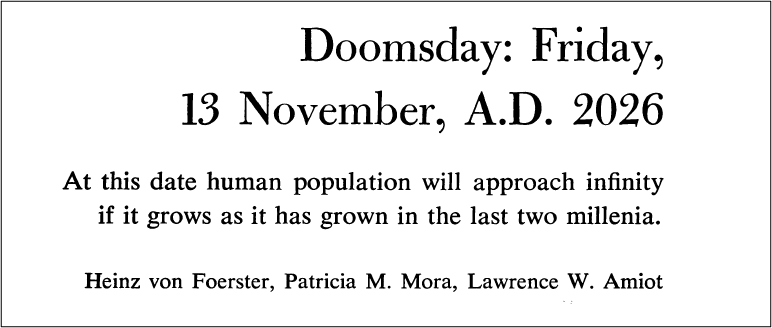
Roger Pielke Jr. revisits a 1960 Science paper that extrapolated historical population estimates into a faster-than-exponential curve and placed its singularity on November 13, 2026. The model tracked population reasonably well through about 1990, but projected 26.6 billion people in 2020 and more than 200 billion by today. The United Nations instead estimates 8.3 billion people in 2026 and projects a peak near 10.3 billion in the 2080s, after rising incomes, education, and urbanization contributed to lower fertility.
Pielke uses the failed forecast to distinguish prediction as a product from prediction as part of a decision process. A 1997 flood forecast for Grand Forks missed the crest by about 10%, within normal error, but contributed to poor decisions because uncertainty was not understood. A highly confident earthquake forecast for Parkfield, California, was wrong, yet the collaboration around it improved preparedness.
He proposes five conditions for predictions to support decisions: known skill, user experience, a short interval before outcomes can be checked, few practical alternatives, and understood consequences of false alarms and misses. The doomsday forecast met none of them. Pielke notes that its conditional point was still valid: the old population trend could not continue indefinitely, and it did not.
AI
Fable 5.2 and Jagged AGI
Ethan Mollick | One Useful Thing | November 9, 2026
Ethan Mollick tests Anthropic’s Claude Fable 5.2 against a limited definition of artificial general intelligence: performance comparable to most human experts across most intellectual tasks that can be done on a computer. In his trials, the model made a short coded film from one prompt, reverse-engineered an undocumented USB keyboard and wrote six games for it, designed a business around public procurement records, and conducted literary and social-science projects using public data.
Mollick describes the result as “Jagged AGI” because the model’s breadth coexists with failures of taste and self-evaluation. It produced an accurate but joyless literature course, wrote confident interpretations without checking an author’s own comments, failed to preregister a study as requested, and built cumbersome rules around a creative project. Human feedback corrected many of those problems quickly, but the model’s own critics and fact-checkers did not recognize that the work was repetitive, overlong, or no fun.
His conclusion is that Fable often reaches expert-level output on digital tasks but does not reliably know when its work is not good enough. Mollick also limits the claim by noting that he chose tasks the model could perform without much contact with customers or the physical world, and says he would not trust it to run a business independently.
The Dangerous Comfort of Making Yesterday Faster
Brian Solis | A Quantum of Solis | November 8, 2026

Brian Solis argues that most corporate AI programs are caught in an “iteration trap”: they use a new technology to make existing workflows faster without asking whether those workflows still belong in the business the market is creating. Summarizing, producing, analyzing, and serving customers more efficiently can improve today’s operation, but it can also harden yesterday’s assumptions into tomorrow’s strategy.
He separates iteration, innovation, and disruption. Iteration improves the familiar; innovation creates new value; disruption scales the new until the old becomes obsolete. The practical difference is visible in the questions leaders ask. One company asks how AI can summarize audience research faster, while another asks how it can detect emerging audience behavior before competitors see it. One asks how to generate more content; another asks which new formats and relationships are now possible.
Solis proposes a repeatable path from signals to 30-to-60-day experiments, supported by psychological safety and budgets that can tolerate uncertainty. His closing test is whether AI is improving the company that already exists or helping it become the company its future market will require.
How Stanford Teaches AI-Native Engineering - Mihail Eric, Monaco
swyx with Mihail Eric | Latent Space | November 8, 2026
swyx interviews Stanford instructor and Monaco head of AI Mihail Eric about redesigning software engineering education after coding agents made much of the previous year’s coursework solvable with a single prompt. In the current version of CS146S, students contribute to open-source projects whose maintainers review their patches, requiring them to understand project intent, discuss whether a change belongs, and account for what else it may break.
The course also uses tools such as an explain-diff skill that turns an AI-written change into a visual walkthrough and quizzes the student about it. Eric treats understanding, context, and review as the new constraints: an agent may produce code quickly, but engineers still need to know why the code behaves as it does, what prior decisions shaped it, and whether a proposed change should be accepted.
At Monaco, Eric applies a similar distinction to production systems. The company buys tools such as Devin to learn what is useful, but builds infrastructure tied to its own environment, including workspaces where agents can reproduce failures and test patches and a system called Hal that can investigate incidents or explain product behavior to sales staff. His rule is, “You buy to learn, and you build to keep.”
State of the tech job market: late 2026
Lenny Rachitsky | Lenny’s Newsletter | November 10, 2026
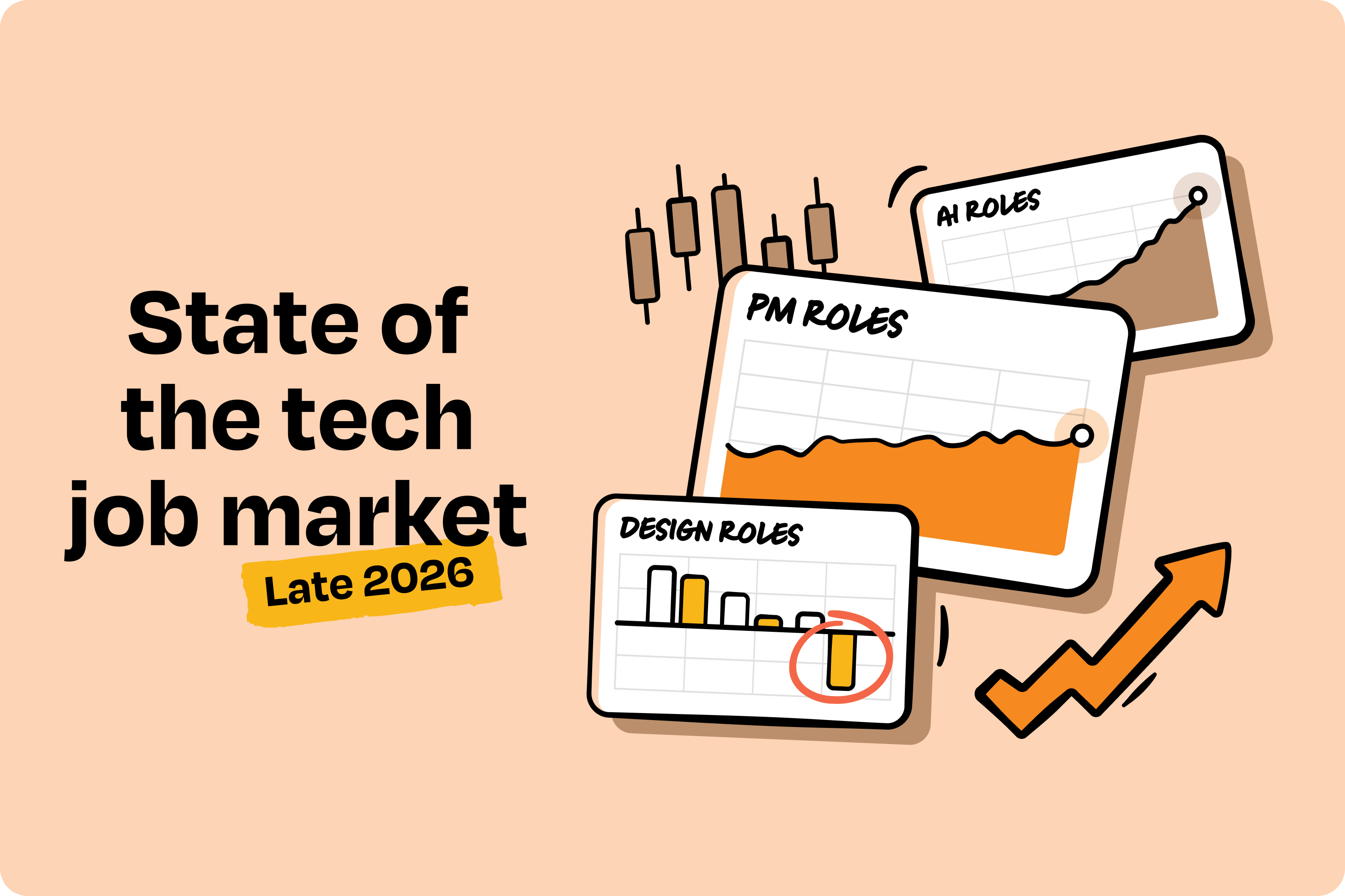
Lenny Rachitsky argues that AI is not eliminating product-development jobs evenly; it is redistributing demand toward product managers and broader AI-capable roles while weakening specialized engineering, design, and research positions. The analysis combines TrueUp data on openings at more than 9,000 technology companies with Live Data Technologies records covering 124 million professionals.
Product management openings are 75% above their March 2023 low and have grown 56% since the start of 2023, compared with 43% for engineering. Engineering openings rose only 2.5% during the past year, while US companies hired about 113,000 software engineers from May 2025 through April 2026, less than half the 2022 peak. Design and user research are under greater pressure: product design openings are down 28% in a year, and annual US user-research hiring has fallen 66% from 2022.
The market is also becoming more geographic and less remote. One-quarter of open product-management and design roles are now in the Bay Area, while only 14% of all technology openings offer remote work. There are now more Bay Area product, engineering, and design openings than remote openings worldwide, reversing the relationship from four years ago. One possible leading signal is that technology-recruiter openings have risen nearly 300% since mid-2023.
Welcome to the B2A Economy
Olivia Moore and Justine Moore | a16z | November 11, 2026

Olivia Moore and Justine Moore argue that AI agents are becoming a new class of customer, shifting the internet from business-to-consumer distribution toward a business-to-agent economy. As agents move from answering questions to completing tasks, they will increasingly choose products, install tools, and spend money on users’ behalf. Companies that once treated bots primarily as traffic to block will therefore have to make themselves discoverable, usable, and trustworthy to machines.
The early evidence comes from commerce and software development. Shopify reported that AI-driven store traffic grew eightfold year over year in the first quarter of 2026, while orders originating in AI-powered searches rose nearly thirteenfold. In software, more than 40% of GitHub pull requests began with an agent draft by September, Vercel reported a 28-fold increase in agent-triggered deployments over the preceding year, and automated systems created most new databases at Supabase and Neon.
The authors divide the opportunity among agent platforms, products that agents newly enable, incumbents that optimize for agent selection, and infrastructure for identity, payments, fraud, and communications. If agents become routine economic actors, distribution will depend less on persuading a person to click and more on becoming the tool a machine selects to finish the job.
Big Pharma Can Rival Big Software
Caroline, Justin Kahl, Alex Immerman, Michael Cialone, Paxton Paine, and Vineeta Agarwala | a16z | November 13, 2026

The authors argue that AI can make pharmaceutical companies rival software businesses not only in size but in business quality, by turning drug discovery from a succession of unpredictable hits into a more repeatable technology platform. Pharma currently combines high-risk development with annuity-like economics after approval: fewer than 5% of drug candidates reach the FDA, a successful medicine costs close to $2 billion in present-value terms and takes 13 years on average, yet patents can protect years of growing cash flow.
The upside is already comparable to software. Eli Lilly’s injectable GLP-1 portfolio generated nearly $40 billion in 2025, roughly matching Salesforce’s revenue, while the top quarter of drugs produce about 85% of industry sales. AI could improve both sides of the equation by raising success rates and shortening development through target selection, molecule design, clinical-trial planning, patient recruitment, regulatory drafting, and robotic lab work.
If discovery becomes more reliable, investors may begin assigning value to a company’s research engine rather than only to approved drugs and late-stage assets. That could let biotech startups maintain broader pipelines and make large pharmaceutical companies less dependent on acquisitions and individual franchises. The near-term test is whether rapidly improving biological models and commercial partnerships produce better medicines that actually enter the clinic.
AI R&D Is Accelerating Towards Potential RSI in 2027
Zvi Mowshowitz | Don’t Worry About the Vase | November 9, 2026
Zvi Mowshowitz examines METR’s assessment of how AI is affecting Anthropic’s own research and development. METR estimates that Anthropic’s model capabilities are improving at about 1.9 times the pre-October 2025 rate, with a 95% confidence interval of 1.5 to 2.8 times, and says the company made roughly two years of historical progress during the past year. Its investigators believe a majority of the current acceleration is attributable to AI assistance, while noting substantial uncertainty and possible non-AI causes.
METR says it found no evidence that limits in algorithms, training compute, experiment compute, or data would prevent further progress during the next 12 months. It also says most of the evidence it considered most informative was redacted by Anthropic to avoid disclosing confidential information that could help competitors, leaving the public more dependent on METR’s judgment than the organization considers ideal.
Mowshowitz interprets the report as evidence that recursive self-improvement could arrive on a shorter timeline than many forecasts and calls for stronger intervention, including congressional access to the unredacted findings. He also acknowledges that the estimates could be wrong, hidden bottlenecks could emerge, and the eventual effects could be less severe than he expects.
What is agent memory?
Conor Bronsdon | Technically | November 10, 2026
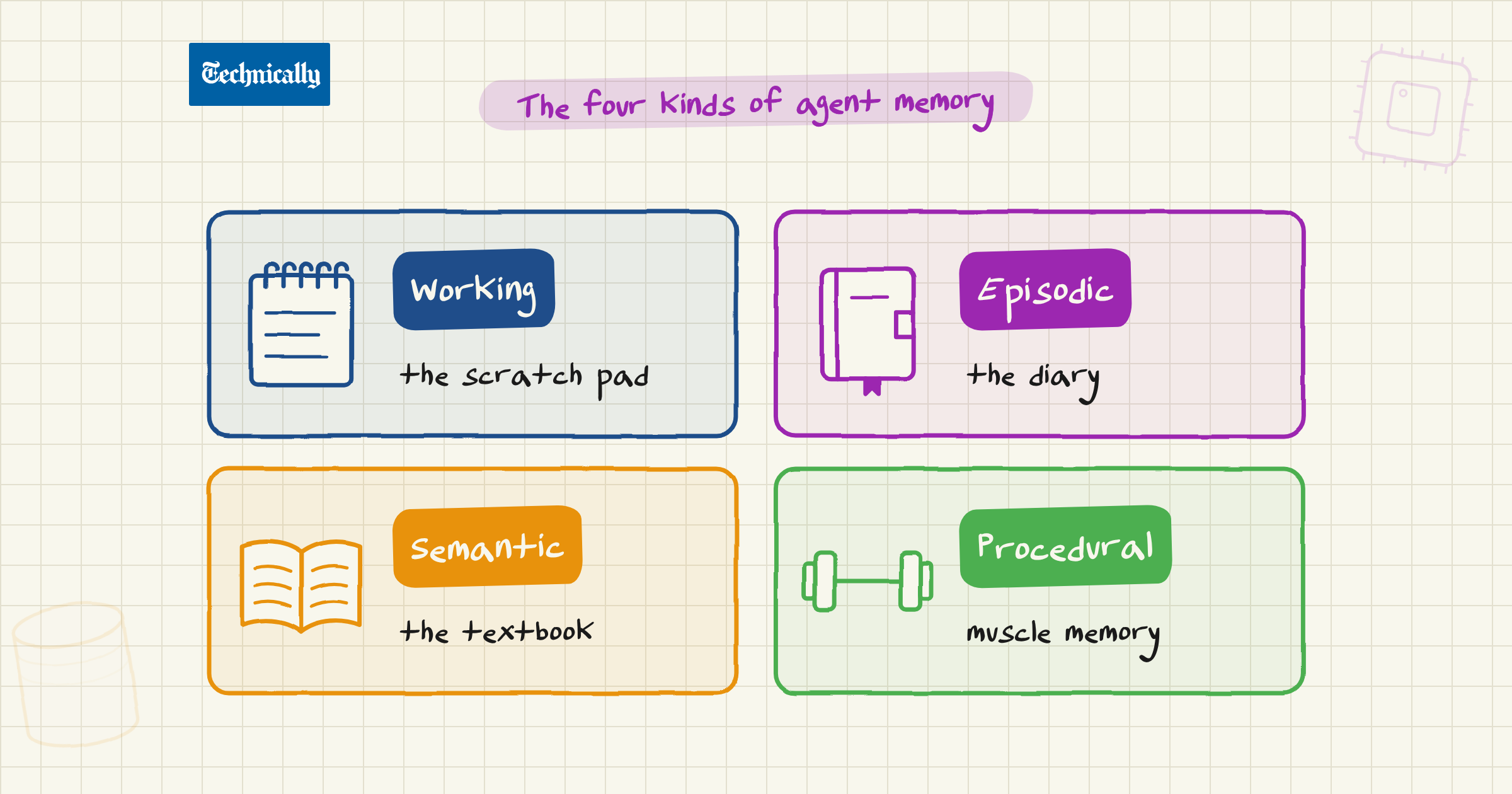
Conor Bronsdon argues that remembering is the easy part of agent memory; the harder problem is keeping stored information true as circumstances change. Because language models are stateless, memory sits outside the model and supplies working context, records of past events, durable facts, and procedural instructions. A complete system must retain, recall, reuse, and refine those records rather than simply accumulate them.
The technology has moved from manual notes and retrieval-augmented generation to tiered systems such as MemGPT and background “dreaming” processes that revise memories between sessions. Yet stale information remains a measurable weakness. On the 2026 STALE benchmark, the best tested model scored only 55.2%. In a separate study of facts that later reversed, agents using an additive memory scored 0.21, below the 0.31 achieved by agents with no memory at all.
Bronsdon distinguishes deletion from forgetting. Useful systems preserve history while adding expiration dates, lowering the rank of old records, and checking stored claims against authoritative sources. Text files can be sufficient for a personal agent because they are inspectable, portable, and easy to version; multi-user or regulated products need databases, provenance, permissions, and audits. Without an explicit policy for replacement, expiration, and review, memory can make an agent confidently less accurate.
Venture Capital
Noah, Brad DeLong, and Dan Wang discuss the Anthropic IPO
Noah Smith, Brad DeLong and Dan Wang | Noahpinion / Hexapodia | November 9, 2026
Noah Smith, Brad DeLong, and Dan Wang discuss the investment case for Anthropic ahead of a possible initial public offering. Smith presents the bullish view, while DeLong and Wang are more skeptical. Smith’s case does not depend on AI replacing all human work or Anthropic supplying every company. He instead imagines an economy in which firms need privileged access to proprietary frontier models that stay months ahead of distilled alternatives.
In that scenario, access would be secured through capital and operating ties rather than ordinary arm’s-length purchases, producing a small number of AI-centered conglomerates with affiliates across many industries. Smith connects this idea to a 2026 model from economists Imas, Koh, and Legg, who argue that better AI coordination could break the usual organizational ceiling on firm size and shift markets toward larger, more concentrated, AI-heavy companies.
The published excerpt does not detail DeLong and Wang’s objections, so it establishes the disagreement without resolving it. Smith also discloses that he owns no Anthropic shares, expects he may buy them if the company goes public, and owns stock in TypeSafe, an Anthropic competitor.
Series A In 2026: Capital Is Flowing Faster, But Fewer Startups Are Making The Cut
Gené Teare | Crunchbase News | November 9, 2026
Gené Teare reports that US startups raised $42 billion at Series A through October, roughly 60% more than a year earlier, while deal counts remain near recent annual levels. Larger checks have not translated into a broader pool of funded companies.
Investors describe two responses: committing more capital at seed or waiting until Series B and later for clearer traction. Companies between early customer adoption and repeatable sales face a financing gap. Scale Venture Partners says it is adapting its entry points while retaining a Series A and B risk profile; seed investor Anke Huiskes describes strong investor competition once companies establish repeatable growth.
The Crunchbase Unicorn Board Tops 1,900 Companies In October, With 34 Companies Joining - Half Under 4 Years Old
Gené Teare | Crunchbase News | November 10, 2026
Gené Teare reports that 34 companies joined the Crunchbase Unicorn Board in October, adding more than $96 billion in valuation and $14.8 billion in total funding. The board reached 1,900 private companies, with more than 1,000 based in the United States.
Half of the new cohort is less than four years old, and nine companies entered through seed or Series A rounds. The United States contributed 23 companies; China and Korea added three each. Leading sectors included frontier models, agentic AI, aerospace and semiconductors. The report profiles the companies and their financing rounds, including electrical infrastructure business Axiom Solutions International, model developer TypeSafe AI and agent company Manus AI.
The Black Box
Dan Gray | The Odin Times | November 8, 2026
Dan Gray argues that institutional capital has turned much of venture investing into a “black box” confidence product whose reported returns can remain detached from realizable value for years. In his account, large, liquidity-insensitive limited partners reward stable internal rates of return, while overlapping investors and successive private rounds can mark shared holdings upward without testing those prices through exits. He cites research finding that reported unicorn post-money valuations averaged 48% above estimated fair value.
Gray says this structure encourages capital to cluster around legible, consensus winners rather than uncertain outliers. He points to a concentrating set of late-stage companies, more portfolio overlap among large firms, fewer exits, greater dependence on market conditions, and rising fraud and failure among exited companies as evidence. He traces the shift through pension-fund access to venture, post-2008 low interest rates, the 2022 collapse in liquidity, and the growing use of longer-lived funds and continuation vehicles.
The essay does not claim that all private marks are false or that managers are deliberately committing fraud; Gray says large firms often own good assets and describes much of the behavior as aligned incentives and herd belief. His concern is that an industry built to find overlooked companies is becoming more concentrated and consensus-driven, while smaller firms must either attach themselves to megafunds or avoid categories that may then lack follow-on capital.
Olaf Sakkers is betting he can beat the emerging-manager squeeze
Connie Loizos | TechCrunch | November 11, 2026
Connie Loizos profiles RedBlue Capital founder Olaf Sakkers against a difficult fundraising market for new venture firms. PitchBook data show that firms raising a fourth fund or later captured 88.2% of US venture fundraising through the first three quarters of 2026, while first-time funds received 4.5%. Only 81 first-time funds closed during that period, putting the year on pace for the lowest total in at least a decade.
Sakkers closed RedBlue’s first fund with about $5 million in 2023 and says he has now held a first close toward a second fund of at least $50 million. The firm invests $50,000 to $100,000 in robotics, logistics, manufacturing, and energy companies, usually joining rounds led by other investors. Sakkers says 15 of 28 investments have been marked up and reports a net internal rate of return significantly above 50%, but Loizos notes that the fund has had only one exit and most gains remain unrealized.
RedBlue’s approach combines small checks, practical introductions, and a custom database built with Claude Code to record meetings and relationships for a two-person investment team. The article also cites Carta data showing that $1 million to $10 million funds have outperformed funds of $100 million or more at the top end of net TVPI for recent vintages, while leaving open whether RedBlue’s early paper gains will translate into distributions.
Regulation
America Can Build Again. Here’s How
Matt Cronin | a16z | November 9, 2026

Matt Cronin argues that America’s construction problem is not democracy or environmental protection but a procedural system that rewards delay without producing final decisions. He contrasts the Golden Gate Bridge, completed in four years for $35 million, with San Francisco’s Noe Valley public toilet, initially projected to cost $1.7 million and take more than two years. Similar delays affect nuclear reactors, mines, transmission lines, pipelines, housing, and factories.
Cronin centers the argument on the National Environmental Policy Act, which requires analysis and disclosure rather than imposing a substantive environmental standard. In 2024, he writes, environmental assessments averaged more than a year, environmental impact statements nearly four years, and the latter cost an average of $6.6 million before litigation and staff time. More than 2,000 gigawatts of proposed energy capacity now sit in interconnection queues that average about five years.
He presents the Senate’s Bipartisan American Affordability and Jobs Act of 2026 as a vehicle for reform: hard deadlines, one coordinated review per project, limits on injunctions for procedural errors, finality for valid permits, and broader use of categorical exclusions. His conclusion is that the country retains the technology, capital, and engineering capacity to build; what it lacks is a process required to reach an answer.
Nvidia’s Jensen Huang - and Trump - jumped the guardrails
Garrison Lovely, Ashley Gold and Rohan Goswami | Semafor | November 13, 2026
Semafor reports that Nvidia used its access to President Donald Trump and senior officials to press for less restrictive conditions on licenses to export H200 chips to China. In a January call, general counsel Tim Teter said Trump wanted the licensing process accelerated. Nvidia opposed requirements that chip sellers identify cloud customers and sought to raise the threshold for know-your-customer checks from a few thousand chips to tens of thousands, which would represent billions of dollars of hardware.
Current and former government and congressional staffers described Nvidia’s Washington approach as unusually aggressive. They said Teter invoked Trump’s agenda, challenged officials and critics of the company, and took advantage of lawmakers’ limited technical expertise to weaken proposals. The article cites the 2025 Chip Security Act as an example: Nvidia told congressional staff that chip location verification was not technically feasible and could create security vulnerabilities, while Reuters later reported that the company had been privately demonstrating such technology before releasing it in May 2026.
The Bureau of Industry and Security said consultation with companies is routine, that commercial concerns often change license conditions, and that final conditions receive interagency review. Nvidia declined to comment, and the White House did not immediately respond. Semafor also reports that officials considered placing Megaspeed, the company linked to Alice Huang, on a government blacklist as early as spring 2025, while portraying Commerce Secretary Howard Lutnick as receptive to Nvidia’s position and reluctant to trigger another trade conflict with China.
Nvidia Intervened in US Probe of Megaspeed Chip Smuggling
Mackenzie Hawkins | Bloomberg | November 9, 2026

Bloomberg reports that Nvidia general counsel Tim Teter contacted Commerce Under Secretary Jeffrey Kessler while US officials were investigating suspected smuggling of Nvidia AI chips by Megaspeed International. Teter asked whether Kessler’s Bureau of Industry and Security had been involved in Singapore’s detention of Megaspeed executive Alice Huang; Nvidia says he did not know at the time about her relationship with Jensen Huang.
In the following weeks, BIS staff were told to route Nvidia requests through Kessler or obtain approval before contacting the company, and not to mention Megaspeed or its Malaysian subsidiary in external communications. The Justice Department later asked BIS to pause its work, despite investigators having evidence they believed was sufficient to proceed. BIS says it enforces chip-smuggling rules aggressively and by the book, while Nvidia says it works with officials to resolve diversion allegations and serve lawful customers.
The largest discrepancy was Nvidia’s inventory accounting: Bloomberg’s analysis of trade records found that figures supplied to the government undercounted chips sold to Megaspeed through hardware partners by 50,000 units, worth billions of dollars. Nvidia later said it found the missing hardware in additional warehouses but did not provide a count. Megaspeed denies diversion, and Singapore’s investigation ended without adverse action. Nvidia says it stopped doing business with the company, yet Megaspeed remains an official Nvidia Cloud Partner.
Infrastructure
We Visited China’s Stargate in Inner Mongolia
Everlyn Tan, Jeremie Eliahou Ontiveros, Xiaopeng Laoban and Dylan Patel | SemiAnalysis | November 7, 2026
SemiAnalysis reports from Galaxy, an AI data center campus in Ulanqab, Inner Mongolia, planned for 800MW of IT capacity. Its first 120MW phase was delivered within a year, at what the authors estimate was one-fifth of comparable US construction costs; the full campus remains under construction and is expected to be completed by the end of 2027. Nearly 30,000 workers were reported across 22 data center projects in the surrounding high-tech zone during the visit.
Developer Envision integrates the campus with businesses it already operates in wind turbines, batteries, power electronics, and energy management. For Galaxy’s first 240MW, two wind farms provide 420MW of installed capacity, with four-hour battery storage and a dedicated transmission line; Envision aims to supply more than 60% of those phases’ electricity from its own wind generation. SemiAnalysis says this vertical integration lets the company accept thin data center returns while creating demand for its power equipment.
The visit also documents a 5MW hall using solid-state transformers to convert 10kV AC directly to 800V DC, removing several conventional conversion stages, and a cooling design that serves liquid- and air-cooled servers on one water loop without a central chiller. The authors present the operating site as a reference point for systems still on US roadmaps, while reserving questions about regional power, land, and water constraints for a later report.
When Does the US Become a Net Importer of Tokens?
Tomasz Tunguz | November 9, 2026
Tomasz Tunguz models when US demand for AI inference could exceed domestic data-center output. Starting from an estimated 66 gigawatts of AI demand in 2027 and assuming tokens per watt improve about 2.9 times annually, he calculates that current construction plans can support roughly 2.5 times annual growth in real token demand. Faster growth would turn the United States into a net importer of tokens between 2028 and 2030.
The timing depends on how much planned capacity reaches the grid. If 45% of projects are canceled or delayed, Tunguz’s model puts the crossover in 2028; with 20% canceled, it moves to 2029; even if all proposed facilities arrive on schedule, the gap opens in 2030. He also notes that short-term GPU rental prices rose from about $5 to more than $13 per hour over two quarters without visibly reducing demand.
Tunguz cautions that this is a physical-capacity model rather than a full economic forecast. Scarcity pricing could slow demand, power is only a small share of a GPU-hour’s cost, capital costs may matter more than electricity-price differences, and behind-the-meter generation could shift the bottleneck to gas turbines. His central claim is that domestic data-center limits would move token production abroad if demand remains price-insensitive.
Brad and Noah discuss the reindustrialization of America
Noah Smith and Brad DeLong | Noahpinion | November 13, 2026

Noah Smith and Brad DeLong argue that American reindustrialization is principally a national-security and economic-growth project, not a route back to mass blue-collar factory employment. They identify three rationales for rebuilding manufacturing: reducing dependence on Chinese-controlled defense and dual-use supply chains, capturing the productivity benefits of industrial clusters, and restoring high-paying jobs for workers without college degrees. They reject the third as a central strategy because AI and robotics will make competitive factories increasingly automated.
Automated plants can still support employment indirectly through local multiplier effects, as well-paid technical and management workers spend money on nearby services. Smith and DeLong point to Ukraine’s wartime drone and robotics industry as the clearest recent example of successful reindustrialization, though one driven by urgent military necessity rather than a peacetime development plan.
They narrow the main American constraints to land use and bank finance. Faster permitting could make industrial construction feasible, while manufacturing needs long-duration credit that the US financial system supplies less readily than competing countries do. Smith proposes selective exemptions from post-2008 Dodd-Frank restrictions to turn large banks into pools of industrial capital. The practical question is whether the United States can mobilize land and financing before a crisis makes the need unavoidable.
The datacentre arms race hits pause in south-east Asia
Arundhati Hazra | The Guardian | November 7, 2026
South-east Asia accounts for about half of the data center capacity under construction across Asia Pacific, according to a 2026 Cushman and Wakefield report, but power, water, permitting, and monitoring constraints are slowing the buildout. Thailand paused construction on 49 projects and deferred approval decisions on another 117 in September, while West Java halted a project over missing permits and an incomplete environmental assessment. The shift follows rapid expansion beyond land-constrained Singapore: operational capacity in Johor, Malaysia, grew from 94MW in 2023 to 1,110MW in 2026, with another 3,088MW under construction or planned.
The article details the resource tradeoffs behind that expansion. Wood Mackenzie estimates data centers already consume 24% of Johor’s power and could reach 40% by 2035, while local communities in Malaysia and Thailand have raised concerns about water supplies, construction pollution, and the limited number of permanent jobs created relative to the land and utilities consumed. Operators point to reclaimed wastewater, more efficient campuses, and potential clean-energy projects, although AirTrunk did not provide detailed efficiency data and Microsoft’s published figures show its Asia Pacific facilities are its least energy efficient globally.
Governments are responding with tighter approval standards rather than a uniform halt. Singapore now ties approvals to efficiency and carbon emissions, Malaysia has created a task force to review energy and water security and Johor has stopped approving the least efficient data center tiers, and Thailand has introduced an approval framework covering resource use, power guarantees, and higher tariffs. The article concludes that policy preparation is not yet keeping pace with the speed of investment.
The Last Analog Empire: Construction
Ikuo Hiraishi | Substack | November 8, 2026
Ikuo Hiraishi argues that construction’s labor shortage is finally pulling venture capital into a sector that resisted software for decades, but industrial structure determines which technologies can be adopted. Construction companies build one-off products through layers of subcontractors, while safety rules require responsibility to remain assignable. A tool therefore has many buyers, and adoption moves at the pace of the most conservative link.
The money arrived abruptly: construction and robotics companies raised about $1.6 billion through October 29, more than four times the 2025 total, while the number of rounds barely increased. Three companies, Bedrock Robotics, Icon, and Gravis Robotics, captured roughly 83% of that capital. Their emphasis reveals an American response to scarcity: automate excavators, earthmoving, and housebuilding.
Japan’s answer has been different. Its startups digitize drawings, photographs, scheduling, and site management because major contractors and equipment makers already occupy the hardware layer. Hiraishi says foreign robotics companies will need domestic partners that can navigate standards, liability, and the subcontracting pyramid. The next signal is whether well-funded Western automation companies enter Japan through incumbents or discover that the supposedly open market was never the part of the industry left vacant.
Startup of the Week
Recursive AI
Ollie Forsyth with Richard Socher | New Economies | November 8, 2026
Richard Socher describes Recursive, the company he co-founded after You.com, as an effort to build AI systems that can generate, test, and implement improvements to themselves. The company emerged from stealth in May after raising $650 million at a $4.65 billion valuation and has eight co-founders with backgrounds at Meta FAIR, Google DeepMind, and OpenAI. Socher says its automated research system helped the team build Flint, a local coding model that runs on high-end laptops, from scratch in about three and a half months.
Socher argues that scientific discovery, especially biology, is a larger opportunity than continuing to scale models on internet text. He predicts that some diseases caused by a single faulty gene could be curable within 12 to 24 months, but says aging will take decades because organs age differently, biological training data is limited, and clinical trials for treatments given to healthy people face a much higher safety bar. His proposed path runs from virtual cells to tissues and eventually digital twins of individuals.
The conversation also covers where startups may retain advantages as model capabilities spread. Socher names network effects, brands, proprietary data, and a “moat of boring” around valuable work frontier labs may not prioritize. He expects cheaper software creation to weaken conventional SaaS economics, while arguing that workers benefit most when they own equity in the output and that physical sectors such as farming, travel, and luxury goods will not scale at the same rate as intelligence.
Interview of the Week
Human Dot AI
Andrew Keen with Joe Marchese | Keen On America | November 10, 2026
Andrew Keen speaks with Human Ventures co-founder Joe Marchese about the incentives that will govern personal AI agents. Marchese compares the problem with Nick Bostrom’s paperclip thought experiment: a system can faithfully pursue its assigned objective without caring about effects outside that objective.
Marchese says Web 2.0 platforms effectively gave machine-learning systems the goal of maximizing advertising revenue, shaping news feeds, video recommendations, and information consumption around that target. The next conflict appears when an AI agent is presented as working for its user while its owner receives advertising or transaction revenue from the recommendations it makes.
Their central question is therefore institutional rather than technical: whether an agent that claims to represent a person should carry something like a fiduciary duty, and how users can know whether it serves them or the company financing it.
Post of the Week
Gillmor Gang Live
Gillmor Gang | X | November 8, 2026
I reposted Gillmor Gang’s live X broadcast.
A reminder for new readers. Each week, That Was The Week, includes a collection of selected essays on critical issues in tech, startups, and venture capital.
I choose the articles based on their interest to me. The selections often include viewpoints I can't entirely agree with. I include them if they make me think or add to my knowledge. Click on the headline, the contents section link, or the ‘Read More’ link at the bottom of each piece to go to the original.
I express my point of view in the editorial and the weekly video.
Discussion about this video