


This week’s video transcript summary is here. You can click on any bulleted section to see the actual transcript. Thanks to Granola for its software.
Editorial
America, the Beautiful: Abundance, Wealth Creation, and Freedom
My friend Om Malik passed away just over a week ago. The post of the week is one of hundreds of testimonials written about Om.
Over 10 years ago now I spent a few days in Iceland on a photography road trip during an event we were both speaking at.

He also took this photo of me at the airport.

It is one of my favorites.
Om was a kind, gentle, but highly motivated individual with high standards for himself and others. I will miss him. And his love of photography, especially Leica cameras.
Kindness and intellect are two compelling human qualities. As we look at the future of America, almost 250 years old, Om’s qualities are a great test for the people we want our society to generate. People who are highly focused on outcomes, but are sincere, kind and open. Abundance creates those kinds of people. Let’s consider the question of today’s America, the AI boom, and the future it can bring if we make it happen.
America is rich. But do we know what its wealth is for?
There has always been a relationship between economic success, society and life experience, and personal freedom. Abundance is the word that for me, describes the combination.
GDP alone, the stock market, the number of millionaires are not the key elements of a society based on abundance. Abundance is the ability of a society to turn wealth creation into better lives, more agency, more choices, more time, more safety, more ownership, and more freedom. Read Doc Searls this week. He is clear on these goals.
And that is the story of this week’s issue.
Scott Nolan’s essay, “America’s Next 250,” is the natural place to begin. He reminds us that 1776 was not a romantic paradise. It was a country without electricity, antibiotics, anesthesia, refrigeration, weather forecasting, standardized time, or real-time communication. Even the richest people alive then lived inside constraints that ordinary Americans today would find intolerable.
James Pethokoukis makes the same point from a different angle. George Washington was the richest American of his time, but he could not buy air conditioning, antibiotics, smartphones, television, modern dentistry, or the ordinary comforts of a middle-class life in 2026. Pethokoukis quotes the economists Philip Trammell and Charles I. Jones, who find that American lifetime well-being has risen roughly “five- to sevenfold since 1940,” far more than traditional consumption measures suggest.
That is the first point. Abundance is not just money. It is what money, technology, institutions, energy, and freedom make possible in the experience of life. Human progress is really all about these human goals.
The Wall Street Journal story on millionaires reports that the U.S. added more than 440,000 millionaires in 2025, “more than 1,200 a day,” nearly half the world’s new millionaires. You may assume that is a complaint. But really it is a measure of capacity.
More millionaires means more founders, more angels, more customers, more local capital, more risk-taking, more philanthropy, more households with choices, and more people able to say no. Wealth creation is not the endpoint of abundance, but it is one of its engines. Millionaires are produced by success, and success is the precondition of a healthy society.
Wealth is not something separate from freedom. Economic success changes the life experience of people. It changes where they can live, what they can learn, what risks they can take, how much time they can buy back, how much dependency they can escape, and what they can build for their children. When it works well, wealth is not merely accumulation. It is agency. And the gap between wealthy and poor is best addressed by wanting all to be able to benefit from wealth, not attacking those that have it. Bill Gates once coined the phrase ‘embrace and extend’. It seems pertinent in this context.
Back to Doc Searls. He gives the human version of this argument in “The First Source of Personal Intent.” His concern is that AI could either expand personal agency or contain it. On one side are surveillance, inference, guesswork, and corporate agents that try to manage people inside other people’s systems. On the other side are personal agents “owned and operated by independent people.”
That is exactly right. If AI is going to produce abundance, it cannot simply make companies more efficient at predicting, pricing, and manipulating customers. It has to make individuals more capable. It has to increase our ability to express intent, control data, protect privacy, negotiate with institutions, and act in markets as first-class participants.
In Searls’ older language, relationship management should become two-way. In the AI era, that means personal AI and personal privacy. The customer should not just be an object in the vendor’s CRM. The citizen should not just be an object in the state’s database. The person should be more powerful.
That optimistic version of AI comes into several pieces this week, showing why optimism is not crazy.
Ethan Mollick writes about “the twilight of the chatbots.” The interesting AI story is no longer a box where you type questions and receive answers. It is agents doing work. Mollick cites a striking example: Claude Opus 4.7 autonomously worked for 14 hours and produced a package estimated at “two to seventeen weeks” of human engineering work for “$251 in tokens.” He also notes that OpenAI’s own internal study found a quarter of employees running at least four agents in a week.
Exponential View widens the lens. Fifty years of Moore’s Law was not fast enough for AI. Compute stock has grown at a “66% compounded annual growth” rate, but the real break came with accelerators becoming “FLOP-factories.” The point is not only that models are getting stronger. It is that the unit of work is changing. Every frontier employee can become the manager of agentic teams.
These developments are the engine of abundance, at least in embryo. Why? Because more people should be able to do work that previously required a large company, a large budget, a large lab, or a large bureaucracy. The frontier of doing hard things will move closer to the individual.
But that is not automatic.
Paul Krugman worries that AI may damage minds if it becomes a substitute for reasoning rather than a tool for it. His concern is learning, not cheating. He thinks that students who outsource thinking do not learn to reason through evidence, form conclusions, or handle the moments when AI is wrong. If true that would be a serious abundance problem, because freedom without capability is thin. But in reality the use of AI tools to gather, sift, consider information will have the opposite effect. Reasoning will be more available and will take new, faster, learning forms. The aggregate of human reasoning is exploding. AI is the tool that permits it.
The Stanford/ADP labor-market work raises another fear. If AI makes entry-level jobs disappear before young people can build judgment, then society gets efficiency without apprenticeship. Again, a misnomer. Young minds will learn faster than ever. Look at how YouTube is already used to teach skills previously only open to specialists. Now anybody can become a specialist.
That is part of abundance. Mass, distributed learning at speed.
The skeptics do not have a case. They have a fear.
AI can’t concentrate power because it is only as good as the humans that create and direct it. It can’t weaken learning because it is a new tool for learning. It can’t turn work into monitoring because workers will not tolerate employers who see it only as that. It can’t hand more leverage to platforms because without human use the platforms are just data warehouses and server farms.
These fears lead to the call to slow everything down. The answer is to accelerate as fast as possible but to also ask what kind of abundance we are building.
The Cosmos Institute piece on scientific breakthroughs is useful here because it reminds us that knowledge is not only text. Above the surface are papers, patents, preprints, and data. Below the surface are lab notebooks, failed experiments, instrument know-how, corridor conversations, and “deep craft.” AI will not make science abundant by scraping the surface and pretending that is the whole iceberg. It has to connect to people, tools, labs, tacit knowledge, and institutions. Indeed, under the hood there is only human achievement.
The same is true in software and business. USV’s “Rebel Alliance” argues that “the AI opportunity is too big and too important to be owned by any one company.” Agents, they argue, are “inherently distributed.” That is true. A distributed agentic economy is a driver of the abundance frame: more layers, more builders, more composability, more competition, more user choice. But you don’t have to be against OpenAI and Anthropic for that to be true.
Logan Kilpatrick at Google DeepMind makes the opposing case in the most interesting way. The Google tool Antigravity, he says, is “the same harness” powering agent features, and over time “the model eats that scaffolding.” That means the model itself may absorb more of the layers above it. The USV version is modular. The DeepMind version is gravitational. The former produces a rebel alliance. The latter produces platforms. Both co-exist in the real world and both are ways to empower humans to get stuff done.
This is an academic distinction. Who owns the abundance does not come out of the operational model of AI. That is a societal decision about distributing the proceeds.
The idea that if the models eat the stack, wealth and agency concentrate is only true if there is no distribution of outcomes. The idea that if the agentic world stays layered, open, and competitive, the opportunity spreads is also too dogmatic. The focus should not be on favoring architectures, but favoring who benefits from the wealth created.
That is why venture capital is splitting into at least two markets. See Gené Teare’s article this week.
Some companies are raising because they sit near the foundation models, compute, infrastructure, and frontier capability. Others are trying to build application companies in a world where the model layer may move faster than they can. Capital is trying to figure out where durable value lives. The answer may be - all of the above. But the real question again, is who benefits?
Which brings us to Sam Altman’s reported 5 percent offer.
The Verge, citing the Financial Times, reports that OpenAI floated giving the Trump administration a “5 percent ownership stake” in the AI boom. At OpenAI’s reported $852 billion valuation, that would be worth about $42.6 billion. The context matters. The government has taken a stake in Intel. It has discussed revenue shares on Nvidia and AMD China chip sales. Bernie Sanders has proposed a 50 percent stock tax on AI gains to fund a sovereign wealth fund.
This is relevant because once the wealth is large enough, politics arrives.
Altman’s instinct is understandable. If AI creates trillions of dollars of value, the public will ask who benefits. A public claim on upside may be a way to distribute the upside of growth.
But a government equity slice of 5% is a very incomplete and inadequate answer to the abundance problem. It may share some financial upside, but it does not necessarily create better lives, more agency, or greater freedom. It may even strengthen the bond between frontier companies and the state in ways that make competition harder. Not many tweaks would be needed to make it a real game changer.
1. Make it 75%
2. Make the Sovereign Wealth Fund a shared asset of every citizen via share ownership from birth. Not a centralized bureaucratic VC-like fund.
3. Enable dividends to be paid to all shareholders (that is everybody)
4. Extend this idea beyond the citizens of a single country.
5. Don’t think nationalization, think distribution of the legacy of human progress to all using a decentralized model.
Bill Gurley put the darker version bluntly: “When you can’t win on the field go to DC.” That is the danger. If public upside becomes a Washington bargaining process, abundance turns into permission, protection, and cap-table politics. The companies should lead this effort. Without that legitimacy will be hard.
The right question is bigger than whether the state gets 5 percent. The right question is how the wealth created by AI becomes widely held capability. Do citizens get better services? Do workers get better tools? Do founders get access? Do customers get more power? Do students get better learning? Do households get lower costs? Do patients get better care? Do individuals get personal agents that serve them, not just companies that sell to them?
That is the difference between redistribution after the fact and abundance as a design principle.
Adam Tooze’s China pieces show the opposite problem. China has vast productive capacity and an AI boom of its own, but wealth is walled inside capital controls and political constraints. The next China shock is not the old free-trade story. Tooze calls it “mercantilist-on-mercantilist violence.” That phrase matters because it captures a world in which great powers try to manage prosperity through walls, subsidies, controls, and retaliation.
America should not copy that reflex. Nor should it copy Europe’s instinct to regulate first and discover later. Nor should it allow California-style abundance politics, where wealth creation is tolerated only after it has been morally scolded, taxed, delayed, litigated, and made unaffordable to live near.
The immigration piece in Rest of World belongs in the same frame. America’s immigrant tech workers are paying an “uncertainty tax.” H-1B registrations fell 38.5%. This is madness if the real project is abundance. A country trying to win the next 250 years should want talent, capital, energy, ideas, and ambition to move toward it.
Infrastructure is the other hard constraint. AI requires new materials, more energy, more grid capacity, more cooling, more data centers, and more physical competence. We lose too much electricity in transmission. We build too slowly. We argue about abundance while tolerating the bottlenecks that make it impossible.
This is why America at 250 needs to embrace rapid progress to free and plentiful energy and ubiquitous AI. The next breakthrough is not only in software, it is energy, materials, compute, biology, manufacturing, science, capital markets, immigration, education, and personal agency. AI is the accelerator, but the story is human progress.
Can America convert frontier technology into a better life?
That means wealth creation, yes. It means new millionaires, yes. It means startups, venture capital, and public markets, yes. But it also means lower costs, better health, more learning, more ownership, more privacy, more personal power, and more freedom. And as we automate away jobs it means more leisure and more choice over how to spend the real asset - time.
Abundance is not a spreadsheet. It is the lived relationship between economic success, life experience, and personal freedom.
At 250, America’s challenge is not simply to become richer. It is to turn AI, capital, energy, and frontier ambition into a civilization where more people can afford more, learn more, build more, own more, choose more, and become more. That is not only an American dream. It is a human dream. And it is clearly attainable over the next 250 years.
That is the version worth building for.
RIP Om Malik
Contents
Essays
AI
Venture Capital
Regulation
Infrastructure
Interview of the Week
Startup of the Week
Post of the Week
Essays
America’s Next 250
Author: Scott Nolan Published: July 2, 2026

Scott Nolan argues that America’s next 250 years depend on whether the country can recover the frontier habit that turned a preindustrial republic into the world’s leading technological civilization. The essay begins by comparing 1776 with the present: no electricity, antibiotics, anesthesia, refrigeration, weather forecasting, standardized time, or real-time communication, then asks what future Americans might see as equally primitive about today.
The strongest detail is energy. Nolan writes that America has barely increased nuclear generation in two decades, from 768 million MWh in 2001 to 775 million MWh in 2023, and that per-capita usable energy fell off the “Henry Adams Curve” in the 1970s and never recovered. For a former SpaceX engineer and General Matter founder, that makes energy the civilizational bottleneck rather than one sector among many.
The pull is that abundance is not an aesthetic preference. Nolan says scarcity drives conflict, pessimism, and institutional caution, while energy abundance makes room for superintelligence, a nuclear renaissance, Mars, the moon, and a renewed American frontier.
Read more: Source
Measuring human welfare in the Age of AI
Author: James Pethokoukis Published: June 30, 2026
James Pethokoukis argues that AI makes the gap between economic output and human flourishing newly important, because GDP is poorly built to capture the value of new goods, better quality, longer lives, and freedoms that do not show up cleanly in national accounts. The essay starts with the contrast between George Washington’s wealth and what even the richest American of 1799 could not buy: air conditioning, antibiotics, smartphones, television, or comfortable modern dentures.
The killer detail comes from economists Philip Trammell and Charles I. Jones, who use the value of a statistical life as a complement to GDP. Their finding is that American lifetime well-being has risen roughly five- to sevenfold since 1940, far more than the doubling implied by traditional consumption-based measures. Pethokoukis uses that gap to show why periods of radical innovation can make people much better off even when output measures undercount the change.
The pull is that AI may force a better scorecard. If artificial intelligence produces new capabilities, medical gains, safety improvements, and quality shifts faster than GDP can register them, measuring welfare may become part of understanding the technology itself.
Read more: Source
The U.S. Added 1,200 New Millionaires a Day Last Year
Wall Street Journal | Markets & Finance | July 1, 2026
The Wall Street Journal reports on UBS’s Global Wealth Report 2026, framing the United States as the main engine of new millionaire creation. WSJ says more than 440,000 people became millionaires in the U.S. in 2025, or more than 1,200 a day, accounting for nearly half of the world’s new millionaires.
UBS’s own summary gives the broader context: personal wealth rose by more than 10%, the fastest pace in years, while the number of US-dollar millionaires expanded by nearly one million globally, or more than 2,600 per day. That makes the U.S. share unusually large and helps frame the continuing concentration of wealth creation in American markets, companies, and asset ownership.
The pull is that the millionaire economy is not a side effect of growth; it is one way growth gets measured. For a venture audience, the useful frame is that a world adding 1,200 U.S. millionaires a day is also a world producing more angel investors, LPs, founders with personal risk capital, and customers for high-trust private-market products.
Read more: Source
Why Everyone Is Suddenly Talking About “Universal Basic Capital”
Author: Roge Karma Published: July 2, 2026

Roge Karma explains why “universal basic capital” has become a live AI policy idea across ideological lines. The basic premise is that if AI wealth accrues mainly to the owners of AI companies, one way to avoid extreme inequality is to give everyone an ownership stake in the companies or in a broad equity portfolio tied to the boom. Karma distinguishes this from universal basic income: instead of future tax-funded checks, citizens would receive capital accounts that can compound over time.
The piece is careful about the design choice. Karma says a simple account model could be a “no-regrets policy,” quoting MIT economist David Autor, because broader stock ownership helps people share in technological progress even if AI does not destroy large numbers of jobs. But he argues that the version with the most political momentum is different: Bernie Sanders’ proposal would require AI companies to hand a 50 percent stake to a federal sovereign wealth fund, giving government voting rights, board representation, and operational influence.
The strongest warning is about state-company fusion. Karma writes that if the government owned huge portions of OpenAI or Anthropic, it would have an incentive to make those firms financially successful through favorable rules, cheap loans, contracts, lax antitrust, or bailouts. Samuel Hammond puts the risk this way: “If they become joined at the hip, that check goes away. It can easily become a form of regulatory capture.” The essay therefore fits the abundance frame: broad capital ownership may be a serious answer to AI inequality, but government ownership of frontier AI companies could turn upside sharing into political control.
Read more: Source
The First Source of Personal Intent
Doc Searls | Doc Searls Weblog | June 27, 2026
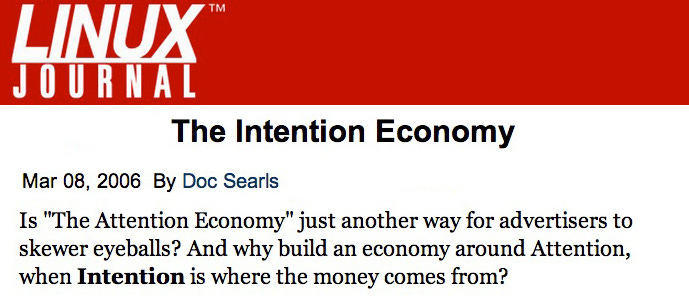
Doc Searls argues that the largest conflict in the AI world will be between containment and expansion of personal agency. On the containment side are surveillance, inference, guesswork, and corporate agents that try to trap people inside managed systems. On the expansion side are personal agents owned and operated by independent people, able to express self-knowledge, privacy preferences, and market intent on the person’s behalf.
The piece returns to Searls’ 2006 “Intention Economy” idea and his 2012 book, which imagined customers taking charge of demand by telling vendors what they want, how they want it, where and when, and under what terms, outside any vendor’s customer-control system. He quotes the book’s argument that demand would become personal, customers would manage their own data, and “relationship management” would become two-way rather than vendor-controlled.
The current AI hook is that “intention economy” is being redefined by others as a system in which AI predicts, commodifies, and manipulates intent. Searls says that hijacks the term. He engages Shuwei Fang’s argument that AI moves media from attention to intention, but asks what happens if systems begin with individual customers and their agency rather than with intermediaries. His conclusion is that full agency requires personal AI and personal privacy, because what people do not say may be more meaningful than what leaks through their queries.
Read more: Source
What Will AI Do To Our Minds?
Paul Krugman | Paul Krugman | June 28, 2026

Paul Krugman argues that the most important effect of generative AI may be cognitive damage rather than productivity gain. The public example is the return of handwritten blue-book exams on college campuses, as instructors try to avoid an arms race in which students use AI to write answers, instructors use AI to detect AI use, and students use still more AI to evade detection. Krugman notes that even in-person testing may be vulnerable as AI glasses spread.
The essay’s main concern is learning, not cheating. Krugman says students who rely on large language models to answer questions do not learn to reason through evidence, form conclusions, or handle situations in which AI cannot answer or answers badly. He places generative AI inside a longer history of outsourced cognition that began with search and smartphones, but says ChatGPT and Claude Code have accelerated the process sharply.
The caveat is that the full discussion is partly behind the paywall. The public section frames the argument and lists the promised follow-up topics: outsourced cognition, smartphone-era learning deterioration, the AI cognitive crisis, and whether AI-driven cognitive loss creates a new form of inequality.
Read more: Source
The twilight of the chatbots
Author: Ethan Mollick Published: June 30, 2026
Ethan Mollick argues that AI work is moving from chatbot collaboration to agent management because model capability is improving faster than organizations can absorb. The essay distinguishes frontier US models from cheaper, near-frontier Chinese open-weight models, but says both are climbing steep curves. The practical change is not just better answers in chat; it is systems that can take longer assignments, use tools, correct themselves, and operate inside harnesses such as Claude Code and Codex.
The killer detail is the shift in measured task length. Mollick cites Epoch finding that Opus 4.7, working autonomously for 14 hours, built a software package estimated at two to seventeen weeks of human engineering work for $251 in tokens. He adds that OpenAI’s own internal study shows agents spreading beyond coding into legal, HR, and other functions, with a quarter of employees running at least four agents in a week.
The pull is that AI plans age quickly on an exponential curve. If institutions move at committee speed while capabilities double, work, policy, and markets will keep experiencing smooth progress as sudden shocks.
Read more: Source
Can AI Make Scientific Breakthroughs?
Author: Iulia Georgescu and Venkatesh Narayanamurti Published: July 3, 2026

Iulia Georgescu and Venkatesh Narayanamurti argue that AI will not produce scientific breakthroughs simply by ingesting papers, generating hypotheses, and writing more papers, because discovery depends on tacit knowledge that is social, embodied, and often impossible to extract from the formal literature. Scientific work is not a clean pipeline of text-to-hypothesis-to-publication; it is a messy practice shaped by craft, instruments, oral tradition, lab culture, judgment, and the accumulated sense of what is worth trying.
The killer detail is the iceberg model of technoscientific knowledge. Above the surface sit roughly 170 million indexed publications, more than 3 million arXiv preprints, patents, clinical trials, and policy documents. Below it are lab notebooks, technical reports, failed experiments, instrument know-how, corridor conversations, and the “deep craft” of knowing what will probably work, whom to ask, and what to ignore.
The pull is that AI may become powerful in science only when it is designed around the real conditions of discovery. Breakthroughs require more than better access to text; they require systems that can participate in the hidden, practical, and social knowledge that makes research move.
Read more: Source
Fifty years of Moore’s Law wasn’t fast enough for AI #580
Azeem Azhar | Exponential View | June 28, 2026
Azeem Azhar opens with a note on Om Malik’s death, describing him as a journalist, founder, investor, questioner, and photographer who understood technology as a human endeavor. The issue then turns to Exponential View’s new “State of the AI Economy” research, which Azhar says is focused on the demand side of AI rather than the easier-to-see supply chain of chips, memory, power, cooling, and data centers.
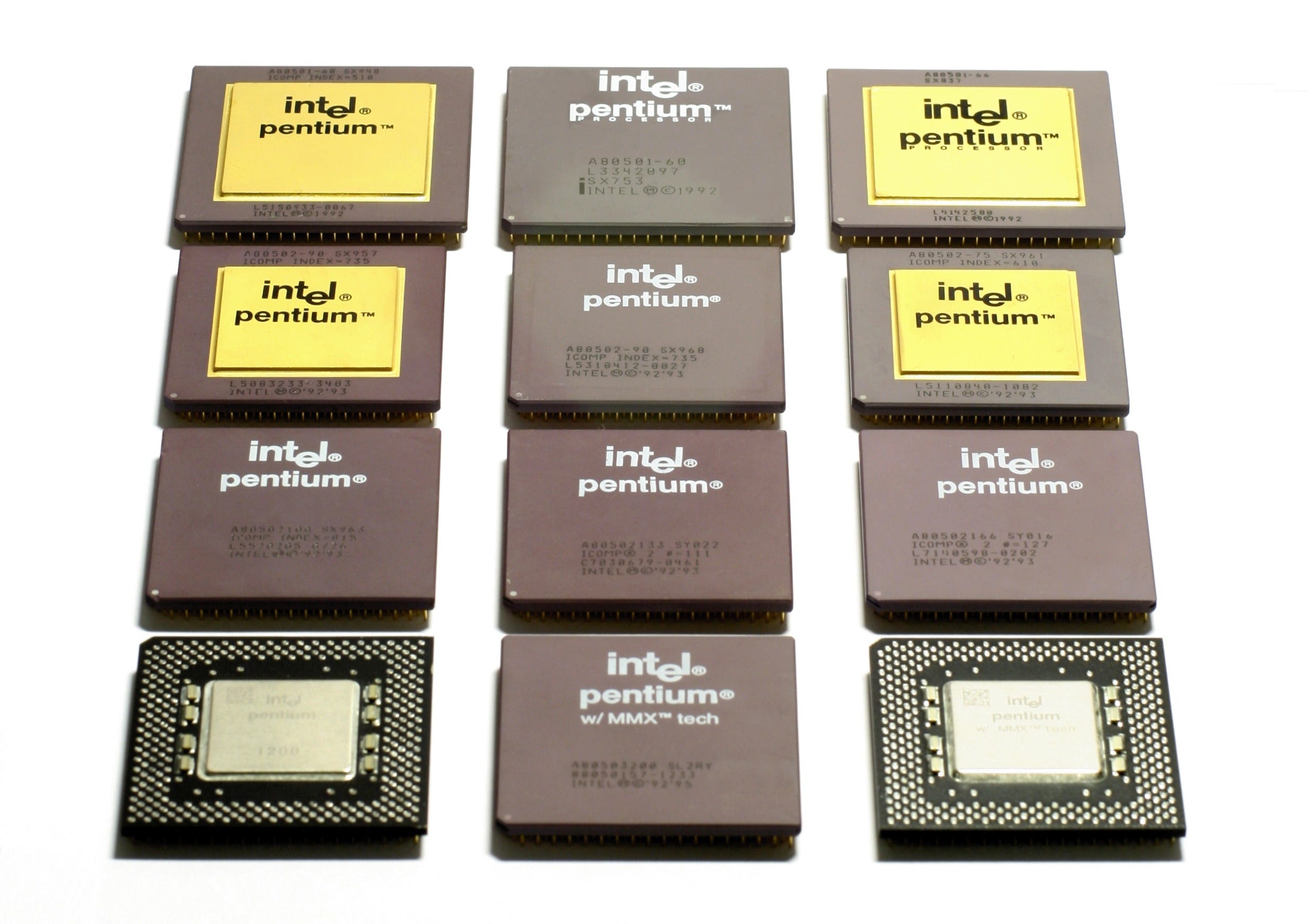
The core evidence is a compute-stock chart that Azhar says breaks a 50-year trend. His model of global compute across mainframes, minicomputers, PCs, laptops, servers, phones, and IoT devices had shown roughly 66% compounded annual growth up to 2023. He says the last comparable break came in the mid-1990s, when Windows 95, the Internet, and chips such as Intel’s Pentium helped push computing past Solow’s paradox before the trend reverted around 2006 as Dennard scaling failed, PCs matured, mobile optimized for constraints, and cloud emphasized utilization.
The AI-era break begins around 2020 as accelerators become “FLOP-factories.” Azhar’s caveat is timing: he guesses the current pace may persist for a few years, maybe a decade or more, before reverting to the long-term trend. The issue also previews the workplace version of the same argument: AI-native firms may have fewer managers of humans, but every frontier employee becomes a manager of agentic teams.
Read more: Source
The Rebel Alliance
Union Square Ventures | USV Blog | June 25, 2026
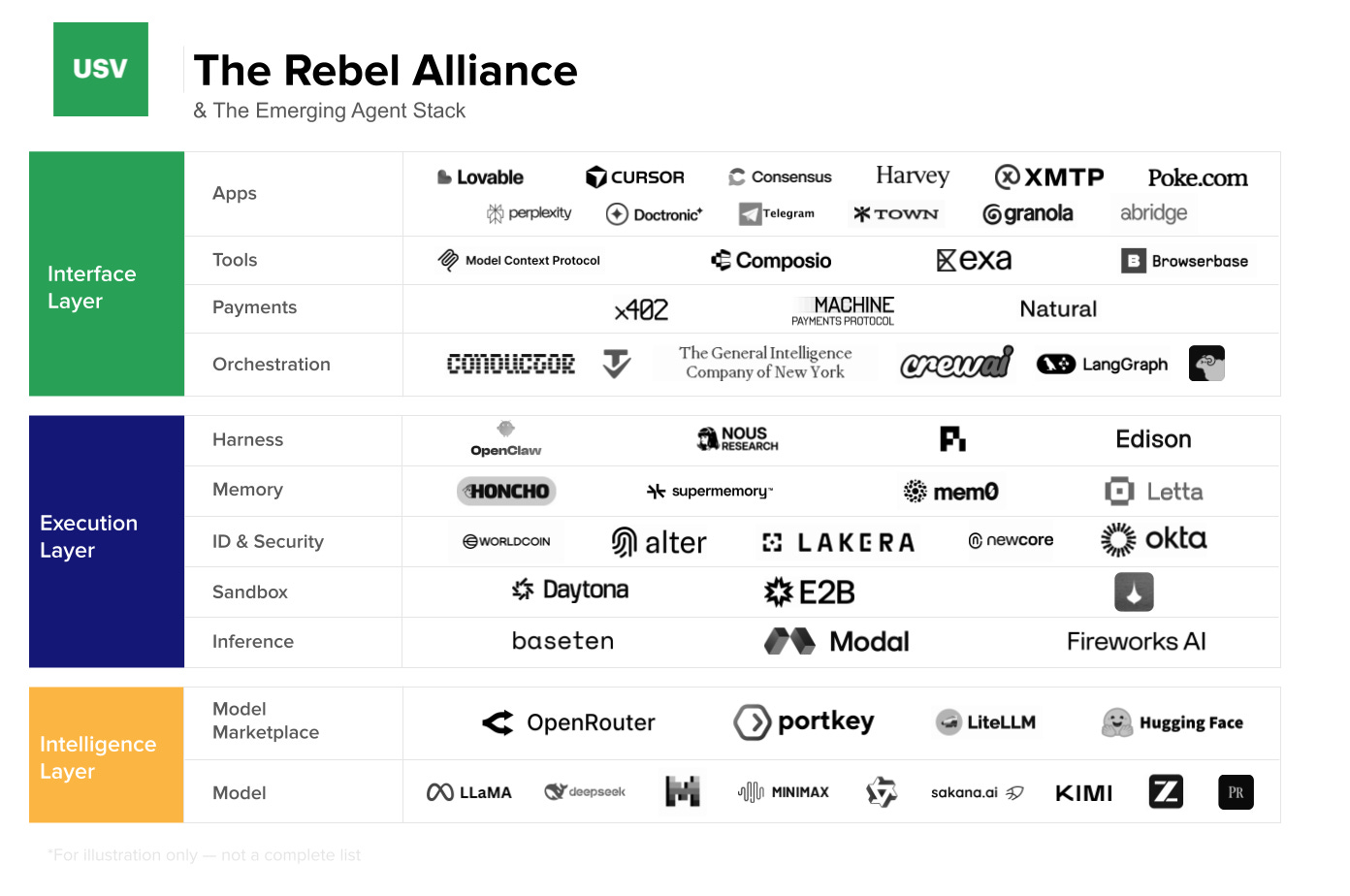
Union Square Ventures argues that agentic AI is unlikely to be owned by one vertically integrated “fat model” company. Its alternative is the “Rebel Alliance”: a broad agentic stack of models, orchestration, memory, execution, identity, payments, routing, and interfaces, with many companies specializing at different layers.
The source’s premise is explicit: “the AI opportunity is too big and too important to be owned by any one company.” USV says chatbots could be vertically integrated, but agents increasingly run as infrastructure through harnesses, CLIs, services, and connected systems. That makes the stack look more like layered web infrastructure than a single app.
The post gives several reasons for modularity: model competition is narrowing frontier advantages on commercial workloads; production AI needs compliance, audit trails, provider swapping, data residency, and cost control; and agents are “inherently distributed,” moving across data sources, services, and compute environments. The layers USV is watching include orchestration as the control plane, harnesses as the body, memory as shared context, browsers for human-agent interaction, routing and model marketplaces, identity, and payments.
Read more: Source
Google DeepMind’s Logan Kilpatrick: Why the Model Eats the Harness
Sequoia Capital | YouTube | June 11, 2026

Sequoia’s interview with Logan Kilpatrick, who leads Google AI Studio and the Gemini API, centers on Google’s “agentic Gemini era” and the role of Antigravity as a common agent harness across Google products. Kilpatrick says Antigravity is not only a coding tool but “the same harness” powering agent features in Search, the Gemini app, Cloud, and AI Studio, with coding treated as one specialized use case of a broader agent layer.
The main argument is the video’s title: models may absorb the external scaffolding now being built around them. Kilpatrick says “the scaffolding is oftentimes a couple of steps ahead” of the model, but then “the model eats that scaffolding” and makes it native. He says the agent harness may be the current example: everyone is trying to build one, but “that perhaps won’t be true... in 12 months” because models may digest much of that functionality.
The startup implication is not that there is no opportunity, but that the edge moves. Kilpatrick says companies building their own harnesses often do so for flexibility and lock-in avoidance, while future differentiation may come from focus, application scaffolding, world-model scaffolding, and outcome-specific product work. His line on startup advantage is simple: “focus is the superpower of startups.”
Read more: Source
Chartbook 455: The AI boom, China’s walled-in wealth and the financial barriers that separate the two
Author: Adam Tooze Published: July 1, 2026
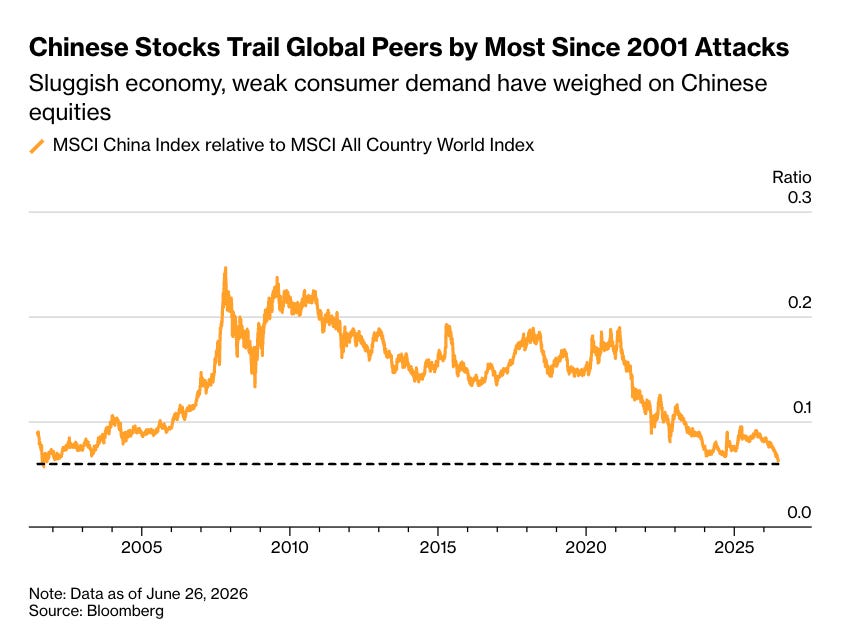
Adam Tooze argues that the world economy is being shaped by two powerful forces that are oddly disconnected: the US AI boom and China’s export-led, deflationary expansion. AI demand is pulling imports into the United States, but mainly from Taiwan and Mexico, while Chinese industrial pressure is landing more heavily on Europe. At the same time, China’s own investors are largely shut out of the US tech asset boom by capital controls that keep domestic wealth walled inside the Chinese system.
The killer detail is Tooze’s use of Richard Casey’s estimate that a fully open Chinese capital account could produce huge outflows because Chinese wealthy households are massively underweight dollar assets. That turns the currency debate inside out: trade hawks want a stronger yuan, but liberalized capital flows could instead trigger depreciation and financial stress.
The pull is that China’s undervaluation, export strength, capital repression, and elite wealth controls are one machine. The AI boom is global, but the financial channels through which wealth joins it are political.
Read more: Source
Chartbook 454: China shock 2.0 and mercantilist-on-mercantilist violence
Author: Adam Tooze Published: June 28, 2026
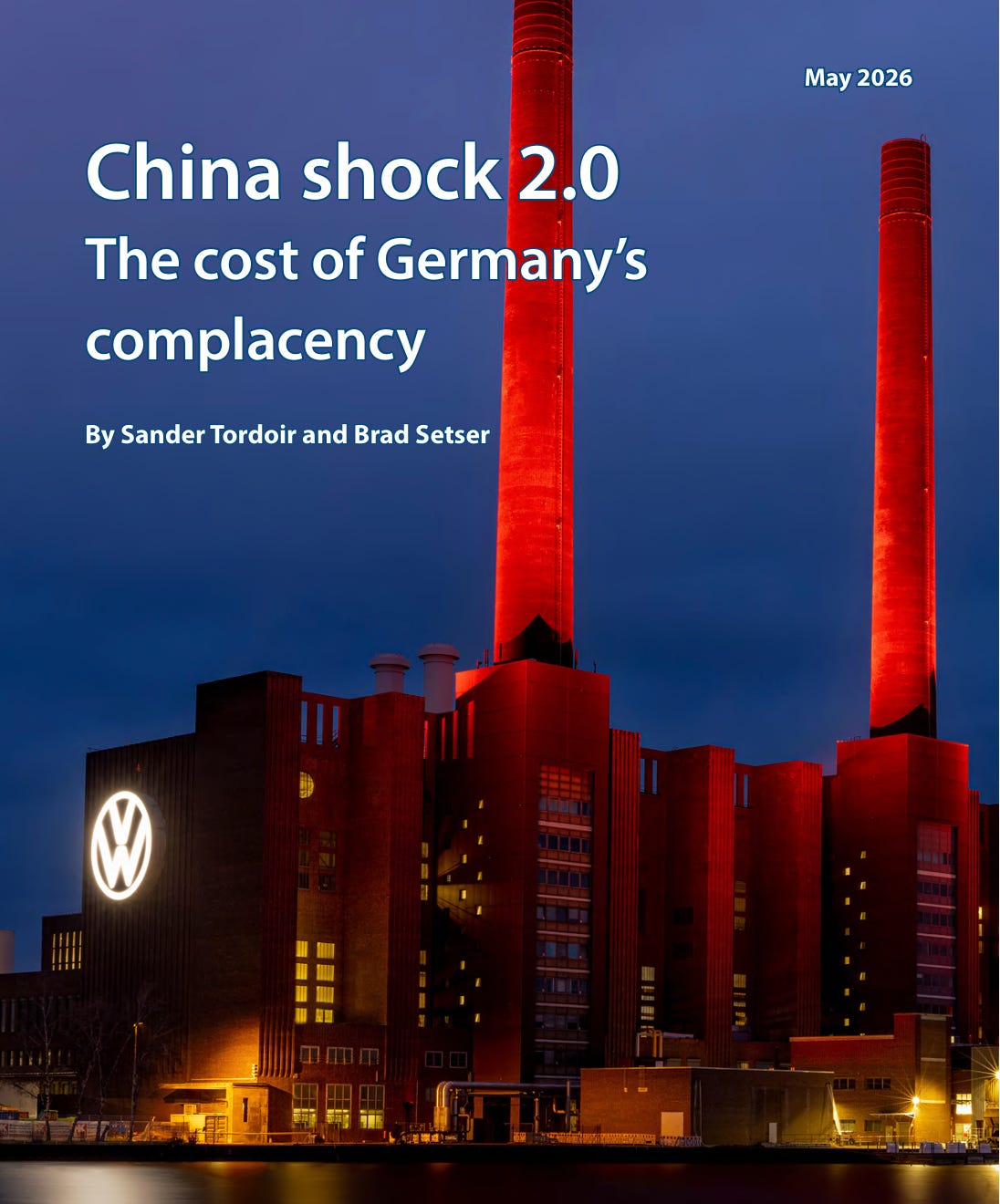
Adam Tooze argues that “China shock 2.0” is not a replay of the early-2000s import shock, but a more strategic collision between China’s industrial upgrade and Europe’s own surplus-driven model. The new shock is concentrated in higher-value sectors, especially cars, batteries, green energy, and chemicals, and it lands hardest in Germany because German industrial politics and European political economy run through the car industry.
The killer detail is that 60% of the $27 billion swing in Germany’s trade balance with China between 2021 and 2025 comes from vehicles. Tooze uses that number to reframe the debate: Europe is not simply a passive victim of cheap goods, because Germany itself is a chronic export-surplus economy. This is “mercantilist-on-mercantilist violence,” with Chinese policy-driven manufacturing colliding with European industrial dependence.
The pull is that Europe cannot answer the problem only with currency accusations or subsidy complaints. The harder question is whether Europe can rebuild industrial strategy fast enough for a world where China competes at the top of the value chain.
Read more: Source
The Strong Do What They Can - and Suffer What They Must
Author: Jonathan Kirshner Published: July 3, 2026

Jonathan Kirshner argues that the familiar Thucydides line about the strong doing what they can and the weak suffering what they must has been turned into almost the opposite of its original lesson. The Melian Dialogue is often used to justify hard realism and the naked exercise of power, especially in a moment when American leaders describe the world as governed by force. Kirshner says Thucydides was warning about that posture, not endorsing it.
The killer detail is the placement of Melos inside the structure of The Peloponnesian War. Immediately after the Athenians destroy Melos, Thucydides turns to the disastrous Sicilian expedition, where Athenian ambition, confidence, and overreach help lead to defeat. The real “Thucydides trap,” in Kirshner’s reading, is not a mechanical war between rising and established powers, but the moment when a strong state abandons prudence for hubris.
The pull is that power politics can be self-deceiving. A country that treats strength as permission may win the argument at Melos, then lose the war in Sicily.
Read more: Source
State Farm just asked 19,000 agents to take up to a 40% pay cut. Progressive took its crown without a single one.
Author: Category Pirates Published: June 30, 2026

Category Pirates argues that State Farm’s agent-contract fight is not just an insurance-company cost problem, but a category error. Progressive has overtaken State Farm in personal auto insurance while selling more than half its policies directly, without agents. State Farm’s response was to gather 19,000 agents in Las Vegas, celebrate them with a Pink concert, and then ask them to sign worse contracts by 2027 or take a buyout, with gross income reportedly at risk of falling as much as 40%.
The killer detail is the customer distinction. The essay says insurers have spent decades chasing “switchers,” customers who shop every renewal and leave whenever a lower number appears, while underusing the data that reveals “superconsumers” who buy more coverage, renew without shopping, and compound lifetime value across categories. The signals may look strange: too much life insurance, gummy vitamins, multiple refrigerators, or a household prepared before COVID.
The pull is that distribution strategy can become self-harm when it is aimed at the wrong customer. State Farm may be cutting the network that could find and serve its most valuable policyholders, while still competing for the least loyal ones.
Read more: Source
AI
Why is Apple asking me to pay more for Big Tech’s AI obsession?
Terrence O’Brien | The Verge | June 27, 2026

Terrence O’Brien reports that Apple is raising prices on consumer products and attributing the increases to AI-driven component costs. The examples include a $300 increase for the 16-inch MacBook Pro, the 11-inch iPad Air moving from $599 to $749, and the HomePod Mini rising by $30 to $129. The piece places Apple in a broader “RAMageddon” affecting desktop PCs, game consoles, and even canceled hardware launches.
The explanation from business professors is that AI data centers have pulled memory production toward high-bandwidth memory and away from consumer DDR5, because the same chip can earn far more inside an AI server than inside a consumer device. The article says the shortage may last years and that companies such as OpenAI, Google, and Microsoft are outbidding consumer-device makers for RAM and storage.
The caveat is Apple’s own financial position. O’Brien notes that Apple has posted record earnings for at least four straight quarters and that its hardware margins are estimated above much of the industry. Ari Lightman of Carnegie Mellon says the tension between those margins and Tim Cook’s “unsustainable” pricing language is hard to square, and describes the hikes as partly about maintaining the growth story investors expect.
Read more: Source
‘It’s not going away’: The Stanford economist who called the AI entry-level jobs crisis early has the receipts
Author: Nick Lichtenberg Published: June 27, 2026

Nick Lichtenberg reports that Erik Brynjolfsson’s early warning about AI and entry-level jobs is no longer just a contested working paper. Stanford’s Digital Economy Lab and ADP Research have turned the finding into the Canaries Dashboard, a live labor-market tracker built from payroll data covering roughly one in six US workers and more than 730 occupations.
The killer detail is the age split. Across all workers, highly AI-exposed occupations are nearly flat, down just 0.2% year over year as of April 2026. Among workers ages 22 to 25, however, employment in those same highly exposed occupations is shrinking at 3.8% per year, while least-exposed jobs for that age group are growing at 2%. Brynjolfsson says the pattern holds after removing the tech sector, accounting for interest-rate sensitivity, and testing for remote-work distortions.
The pull is that AI may be damaging the labor-market on-ramp before it shows up in headline employment numbers. The dashboard’s name is the warning: canaries do not stop the danger, but they say the clock is running.
Read more: Source
Token Costs Threaten Frontier Lab Dominance
Author: Contrary Research Published: June 27, 2026

Contrary Research argues that frontier AI labs face a competitive threat from token economics as much as from benchmark performance. The piece frames OpenAI’s GPT-5.6 Sol pricing at $5 per million input tokens and $30 per million output tokens as a step down from Fable 5, but still far above the open-source alternatives now pressuring enterprise budgets.
The killer detail is the scale of the gap: DeepSeek V4 Flash is priced around $0.14 per million input tokens and $0.28 per million output tokens, roughly 36 times cheaper than GPT-5.5 on input and more than 100 times cheaper on output. Z.ai’s GLM-5.2 is also described as costing about one-eighth as much as Claude Opus 4.8 for some tasks, while six of the top ten models on a leading AI leaderboard were developed in China.
The pull is that enterprises have barely begun to respond. Uber reportedly burned through its annual AI budget in four months, yet about 95% of enterprise AI usage still runs on frontier models, leaving a large cost-driven migration still ahead.
Read more: Source
The Long-Horizon AI Agents Ceiling Is A Product Problem
Author: Nilesh Barla Published: June 27, 2026

Nilesh Barla argues that long-horizon AI agent failure is a product-design problem, not something teams can safely defer to the next model release. The core issue is the “planning ceiling”: the point beyond which an agent can no longer sustain coherent intent across steps, even when each individual tool call and trace looks reasonable.
The strongest detail comes from METR’s time-horizon measurements. Barla writes that the strongest evaluated agent can handle 16 hours of work on a coin flip, but only three hours reliably. That gap is the practical constraint product teams must design around. He then connects the problem to context dilution, goal drift, and compounding step error, including the simple math that a 2% error per step becomes a 33% failure rate over 20 dependent steps.
The pull is operational: waiting buys a higher ceiling, not a working product. The proposed path is to shrink tasks below today’s reliable horizon, add deterministic guardrails, checkpoint decisions, escalate uncertainty, and use embeddings as working memory so agents stay aligned across long runs.
Read more: Source
TokenBudgeting: Our Conversations with Enterprises on Token Spend
Crystal Huang | SemiAnalysis | June 30, 2026
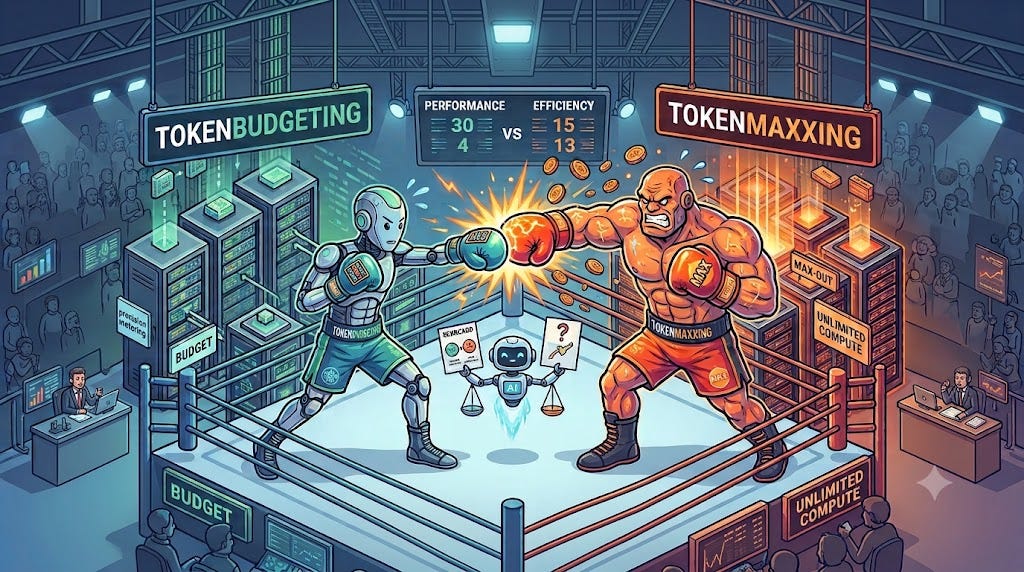
SemiAnalysis reports that enterprise AI usage is moving from “tokenmaxxing” to token budgeting, based on more than 50 conversations with customers by Slack, phone, and at the Databricks AI Summit. The post says widely reported Meta and Uber budget blowups were real but not representative of most enterprise behavior, because many companies are still spending lightly outside engineering and data-science teams.
The strongest detail is the spread in limits. SemiAnalysis says one top-three US aerospace and defense manufacturer caps employees at $250 per month, a large pharmaceutical company caps at $500, Workday and Stripe budgets are closer to $2,000 per month, and one public cybersecurity company uses soft limits of $800 for juniors and $1,600 to $4,000 for more senior staff. A global travel-tech company with 800 engineers out of 1,500 employees spends a little under $10 million a year on AI and recently made Claude Sonnet the default model, with Opus still available by deliberate choice.
The piece’s conclusion is that budgeting is here to stay, but not because API growth is about to collapse. SemiAnalysis says Anthropic’s own documentation puts average Claude Code usage at $150 to $250 per developer per month, with only 10% above $30 per day, and argues that there is not a material risk to second-half 2026 AI budgets while coding, cyber, and white-collar workflows continue to expand demand.
Read more: Source
Most AI Work Can Wait
Tomasz Tunguz | Tomasz Tunguz | July 1, 2026
Tomasz Tunguz argues that teams building AI agents should choose routing architecture before choosing models. The post says the key component is a router that decides which tier of model handles each request, while a separate skill classifier turns raw user intent into a concrete operation such as drafting a reply, summarizing a repo, or running a migration.
The strongest detail is the cost argument. Tunguz says 70% to 80% of agent traffic can run on local models for most non-coding work once the operation set has been flattened through skill distillation, while async batch reasoning can be two orders of magnitude cheaper than real-time inference. He cites Brian Armstrong’s point that Coinbase cut AI spend in half while token usage grew by using better defaults, routing, and caching rather than friction and spend alerts.
The implementation example is Theory’s own agent runtime. It scores tasks on complexity, context size, local memory retrieval, and synchronous failure-mode signals such as missing repo context, long dependency chains, risky migrations, security-sensitive prompts, and high-consequence writes. A nightly evaluator then scores the prior day’s traces and updates router weights. The post’s intent is operational: most AI work does not need a one-second answer, so queueing and routing can matter more than chasing the newest model.
Read more: Source
Venture Capital
Crunchbase Data: Global Startup Investment Hit Record $510B In H1 2026 As AI Boom Accelerates Funding And Exits
Gené Teare | Crunchbase News | July 3, 2026

Crunchbase reports that global venture funding reached a record $510 billion in the first half of 2026, already above the $440 billion invested in all of 2025 and the highest half-year total in its dataset. Q2 alone brought $205 billion across more than 5,000 startups, after $305 billion in Q1, making it the second-largest quarter on record after the first quarter.
The strongest detail is the concentration. Crunchbase writes that OpenAI and Anthropic alone accounted for $217 billion, or 43% of all startup funding in H1, while more than 70% of global startup capital in Q2 went to AI-focused companies. Anthropic alone raised $65 billion in Q2, close to one-third of global venture funding for the quarter, and 16 companies raised billion-dollar rounds totaling $108.6 billion, or 53% of Q2 funding.
The exit data is why this belongs in Venture this week. Crunchbase says Q2 produced the strongest venture-backed exit market since 2021, including the largest venture-backed IPO ever, SpaceX at a $1.77 trillion value raising $75 billion, and the largest startup acquisition ever, SpaceX’s announced $60 billion deal for Anysphere. It also counted 32 venture-backed companies going public above $1 billion and 24 acquisitions at or above $1 billion, totaling $113 billion. The source’s conclusion is that 2026 may mark “the beginning of a cycle in which record private investment and a functioning exit market reinforce one another.”
Read more: Source
Why AI Has Split Venture Into Two Markets, and Most Founders Are Pitching the Wrong One
Author: Corey Lahey Published: July 1, 2026
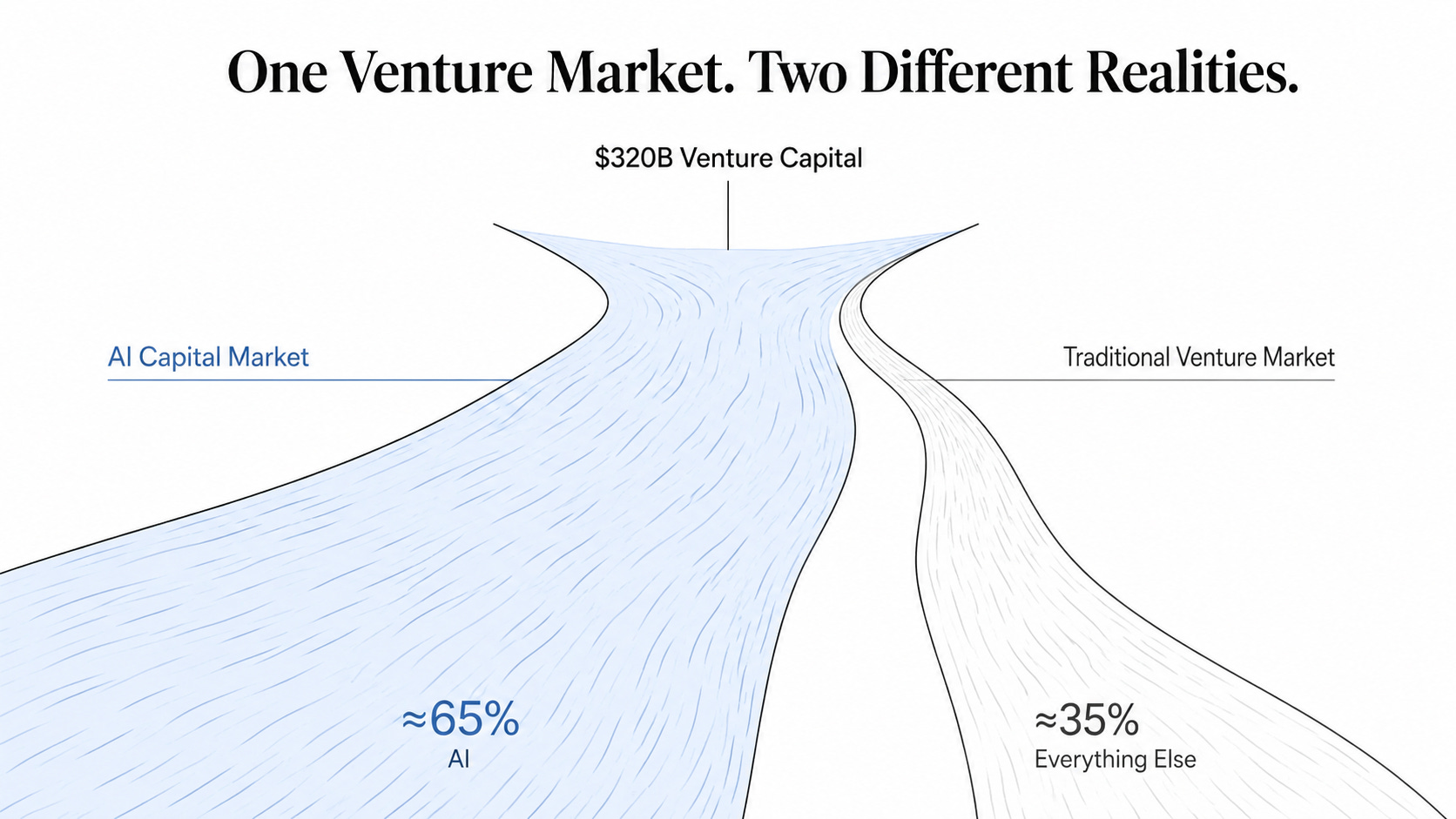
Corey Lahey argues that AI has made aggregate venture statistics dangerously misleading. Founders are reading headlines about a hot market and importing the wrong expectations into fundraising, because the headline numbers combine two different markets: a capital-superheated AI layer and a much more disciplined market underneath. His thesis is that many founders are not failing to tell the story well; they are pitching as if they belong to the AI capital flywheel when investors are underwriting them by older proof standards.
The killer detail is the concentration. Lahey cites NVCA’s 2026 Yearbook showing that AI accounted for 65.4% of 2025 US venture deal value, while the top five companies raised nearly $60 billion. In Q1 2026, he says excluding the five largest deals and exits cuts deal value by 73.2% and exit value by 86.6%.
The pull is practical: fundraising strategy now starts with market lane discipline. AI infrastructure companies may sell speed and allocation scarcity, but everyone else needs proof density, investor fit, clean milestones, and a story that can survive an internal partnership meeting.
Read more: Source
The Bifurcation of Capital is Inevitable
Author: Kyle Harrison Published: June 27, 2026

Kyle Harrison argues that venture capital is splitting into two increasingly different games: giant capital agglomerators chasing rounds large enough to matter, and a long tail of smaller opportunities that become invisible to funds once they scale. He frames the shift through Berkshire Hathaway, where size became both the source of power and the reason whole categories of excellent investments no longer moved the needle.
The killer detail is Tracy Britt Cool leaving Berkshire to build Kanbrick around businesses “too small for Berkshire,” typically family-led companies doing $5 million to $50 million in earnings. Harrison maps that lesson onto venture: the most revealing thing about any capital machine is the set of deals it can no longer afford to do.
The pull is that capital concentration may make the bottom of the market more interesting, not less. Mega-funds took 79.4% of 2024 VC dollars, and in Q1 2026 roughly 73% of LP capital went to five firms. That leaves room for new permanent-capital vehicles, AI-native holdcos, and patient investors built for the opportunities the giants are structurally forced to ignore.
Read more: Source
How We Access The Best Companies
Ollie Forsyth with Ben Miller | New Economies | June 28, 2026

New Economies interviews Fundrise founder and CEO Ben Miller about the company’s move from democratized real estate investing into venture and broader private markets. Miller says Fundrise was born out of the 2008 financial crisis as a reaction against institutionalized finance and the behavior of mainstream financial institutions. The original premise was direct investment into real things, first real estate and now technology companies, with private-market access opened to ordinary investors.
The venture argument is that institutional mandates can produce underperformance because investors are hired to do a specific thing, while good investing often means following opportunity as it changes. Miller says the venture error he regrets is missing strong deals by worrying too much about losing money; in venture, the downside is losing the investment, while the upside can be 10, 20, 30, or 50 times the money. The episode also covers why access is relationship-driven, why venture “value add” can be overstated, why companies stay private longer, and where Miller sees new opportunities in real-world AI applications, longevity, and the physical economy.
The AI thread is practical rather than abstract. The show’s description says Miller discusses how AI is reshaping company building, capital allocation, and the future of work, and the episode includes his own use of AI and thoughts on vibe-coding tools. It is a YouTube-eligible item.
Watch: YouTube embed | Source
Inside Goldman’s $22B Bet on Venture Capital
Turner Novak with Hans Swildens | The Split | July 3, 2026
Turner Novak interviews Industry Ventures founder Hans Swildens after Goldman’s 2026 acquisition of the firm, using the deal to explain how venture secondaries became a major private-markets category. Swildens says the Goldman relationship was built over roughly 20 years, first through the dot-com collapse, then through LP, co-investment, Petershill, and strategic relationships, before Industry joined Goldman with a portfolio spanning 525 firms, 1,600 funds, and more than $22 billion in commitments.
The strongest details are historical and structural. Swildens describes starting Industry by buying venture assets at 99% discounts during the dot-com collapse, and the episode traces the secondary market’s growth from roughly $250 million to $150 billion over 25 years. The conversation also covers continuation funds, debt-structured secondaries, how VCs are “manufacturing their own exits,” and why the secondary market could eventually be several times larger than the primary market.
The startup and LP takeaway is that venture is becoming more institutional, more liquidity-engineered, and harder for undifferentiated seed funds. The timestamped outline includes sections on why scale lets Industry “see the cube,” why seed without differentiation may not work, why asset managers are acquiring venture firms, and how seed survives the platform era. The post includes a YouTube embed.
Watch: YouTube embed | Source
Regulation
Bill Gurley on Anthropic, cheaper models, and DC protection
Bill Gurley | X | June 26, 2026
Bill Gurley argues that Anthropic’s turn toward government protection should be read against customer behavior and model economics. He says customers are finding cheaper alternatives, including open-source Chinese models, while frontier AI companies need revenue growth to support expensive employee secondaries and valuations.
The post points to a Rohan Paul summary of UBS research saying that 60% of companies watching AI budgets are moving toward cheaper models and open-source Chinese models. Gurley’s interpretation is blunt: “When you can’t win on the field go to DC.”
Read more: Source
OpenAI floats giving Trump administration 5 percent cut of AI boom
Robert Hart | The Verge | July 2, 2026

The Verge, citing the Financial Times, reports that OpenAI has floated giving the US government a 5 percent ownership stake as a way to ease tensions with the Trump administration and blunt public backlash against AI. CEO Sam Altman reportedly argued that public ownership would share some of AI’s upside, and the proposal would involve other US AI companies giving the government similar stakes.
The strongest detail is the valuation math. Based on OpenAI’s latest funding round, which valued the company at $852 billion, a 5 percent government stake would be worth about $42.6 billion. The discussions are described as early, and The Verge notes that it is unclear whether other AI companies would agree to a similar arrangement.
The policy context is the administration’s unusually hands-on AI posture. The article points to Anthropic being designated a Pentagon supply-chain risk, recent export controls on its latest models, the government’s 10 percent stake in Intel, and reported demands for Nvidia and AMD to give Washington 15 percent of revenue from AI chip sales to China. The piece also notes that public-upside ideas are not limited to Trump officials, citing Bernie Sanders’ proposal for a one-time 50 percent tax on AI company stock value to create a sovereign wealth fund.
Read more: Source
America’s immigrant tech workers are paying an uncertainty tax
Ananya Bhattacharya | Rest of World | June 30, 2026

Ananya Bhattacharya reports that persistent US immigration bottlenecks and volatile policy shifts are pushing skilled technology workers to consider leaving for Canada, the UK, and Gulf countries. The piece starts from a June 8 court decision striking down President Trump’s $100,000 H-1B fee, but says the broader damage is years of uncertainty around visas, renewals, layoffs, green-card queues, and policy reversals.
The strongest data point is the drop in H-1B demand. Rest of World says fiscal year 2027 H-1B registrations fell 38.5%, and the article frames that decline as a sign that skilled workers and employers are recalculating the value of the US path. The source also describes the issue as an “uncertainty tax”: workers may have jobs, training, and roots in the US, but their legal status can still be shaped by annual lotteries, administrative delays, and sudden rule changes.
The caveat is that the US is still a center of opportunity for many immigrant workers. The article’s point is not that the talent flow has already fully reversed, but that competing destinations now have a clearer opening. Canada, the UK, and the Gulf can pitch predictability at a moment when US policy risk has become part of the career calculation.
Read more: Source
Infrastructure
The AI World Requires New Materials
Zoe Perret | View from Initialized | June 30, 2026

Zoe Perret argues that the AI buildout is running into a materials bottleneck underneath chips, models, and data centers. The piece says copper and aluminum sit inside motors, transformers, transmission lines, bus bars, heat sinks, and windings, but have not fundamentally changed since the 1800s, even as AI compute and electrification put new loads on power and thermal systems.
The investment hook is Initialized’s seed round in Arcturus, which is emerging from stealth with $8 million from Initialized, Toyota Ventures, Breakthrough Energy Discovery, 1517, and Wireframe Ventures. Arcturus is developing copper and aluminum infused with carbon nanomaterials such as graphene and carbon nanotubes, using a laser fabrication process meant to produce drop-in replacements for existing wires and conductors without system redesign.
The strongest details are operational. Perret says the grid needs to grow roughly 10x over the next decade to keep pace with AI compute and electrification, that the US loses about 15% of electricity to transmission resistance, and that Arcturus is starting in unregulated, performance-constrained markets such as drone and robotics motors before moving to data-center heat sinks, EV motors, electric aircraft, bus bars, and eventually grid infrastructure.
Read more: Source
The Fall and Rise of Screwworm
Author: Brian Potter Published: July 3, 2026

Brian Potter argues that the return of screwworm to the United States is a case study in technological success becoming institutional amnesia. The parasite was once a devastating livestock and wildlife scourge, but a decades-long sterile-male eradication program pushed it out of the US, Mexico, and Central America. Because the program worked so well, the public forgot the scale of the problem and the fragile infrastructure required to keep it solved.
The killer detail is the origin of the sterile insect technique. In 1950, USDA entomologist Edward Knipling read Nobel laureate Hermann Muller’s warning that radiation could create “a world of sterile human beings” and asked whether radiation could sterilize screwworm flies. Muller replied, “I know nothing of screwworms but your theory is sound.” Four years later, a Curacao test raised sterile fly drops from 100 to 400 per square mile and eliminated viable offspring within 14 weeks.
The pull is that eradication is not a one-time victory. Potter says the failed Panama barrier will likely require close to a decade of sustained production, monitoring, and weekly sterile-fly drops to rebuild what complacency let lapse.
Read more: Source
Neocloud Together AI raises $800M, leaps to $8.3B valuation
Julie Bort | TechCrunch | July 1, 2026
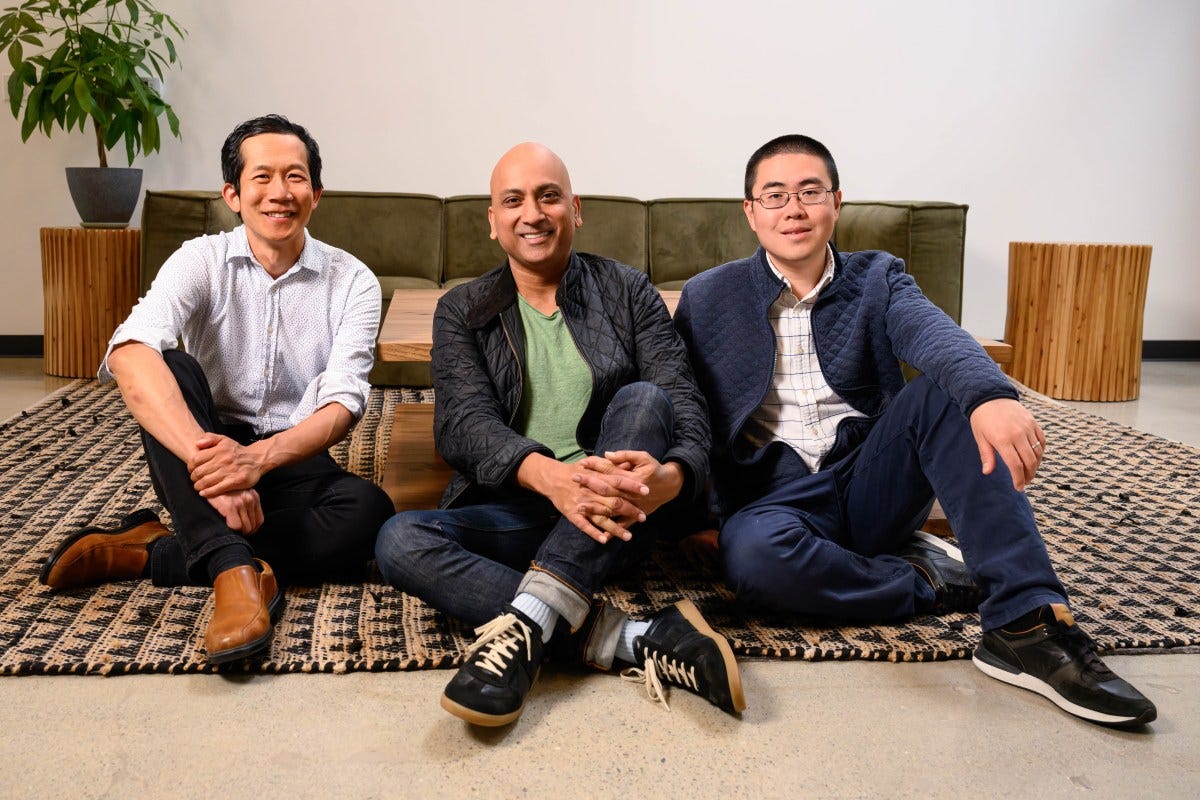
Julie Bort reports that Together AI raised an $800 million Series C at an $8.3 billion valuation. The company, founded in 2022, rents Nvidia GPU clusters and other AI-specific infrastructure, and the round was led by Aramco Ventures with participation from Vista Equity Partners, General Catalyst, Emergence Capital, Nvidia, March Capital, Pegatron, SentinelOne’s S Ventures, and others.
The strongest detail is the pace of the valuation increase. Together AI raised a $305 million Series B at a $3.3 billion valuation about 16 months earlier, after a $102.5 million Series A in 2023. TechCrunch notes that The Information had reported in March that the company was seeking $1 billion at a $7.5 billion valuation, so the announced round appears to be less capital at a higher valuation than the spring target.
The demand story is open-source model adoption. Together AI says annual bookings reached more than $1.15 billion in its last quarter, and Bort writes that companies are increasingly using lower-cost open-source models through neocloud providers instead of paying premium token prices for closed frontier models across all usage. Together AI says industry usage of open-source models has tripled in the past year and names Cursor, Cognition, and Decagon among its paying customers.
Read more: Source
Meta’s Inevitable Cloud
Author: M.G. Siegler Published: July 2, 2026

M.G. Siegler argues that Meta’s AI spending problem and its advertising-dependence problem point to the same answer: Meta needs a cloud business. The company’s core ad machine remains extraordinary, but Wall Street is more skeptical of Meta’s AI capex than of Amazon, Google, or Microsoft because those peers can sell AI infrastructure directly, while Meta still lacks an obvious enterprise revenue engine.
The killer detail is Google’s precedent. Siegler notes that Google Cloud is now roughly a $20 billion-per-quarter business, approaching $100 billion a year and nearly 20 percent of Google’s total revenue, after years of being dismissed as a search-ad one-trick pony. That gives Meta a model for how a consumer advertising giant can turn internal infrastructure strength into a serious enterprise business, even if the transition is slow and culturally difficult.
The pull is that Meta may already be moving in that direction through Meta Compute, AI infrastructure, and failed or blocked enterprise wedges such as Manus. If the company keeps pouring cash into AI, the missing monetization layer may not be another social product. It may be Meta Cloud.
Read more: Source
Interview of the Week
Happy Fucking Birthday, America
Andrew Keen with Christopher Hooks | Keen On America | July 2, 2026
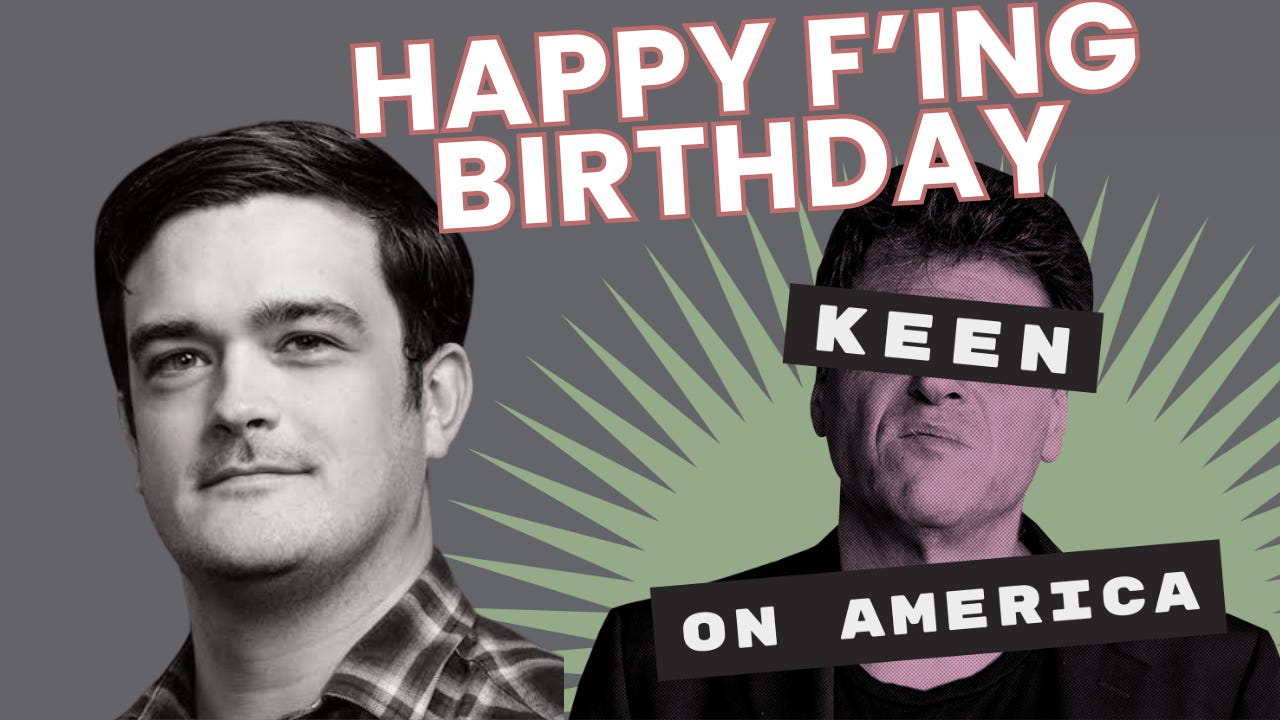

Andrew Keen interviews Christopher Hooks about Hooks’ Harper’s cover essay on America at 250, “Happy fucking birthday, America.” Keen frames the piece as a funereal account of an exhausted United States, beginning with Hooks’ reporting on America250, the bipartisan commission created near the end of the Obama era to organize the semiquincentennial celebration.
The interview’s setup says Hooks found the official anniversary machinery demoralizing: bureaucratic dysfunction, disputes over purpose, Trump-era lawsuits, NDAs, and a Washington landscape that Keen describes as didactic and insistent. The quoted line from Hooks is that there is “a kind of exhaustion and resentment,” and perhaps a feeling of foolishness about remaining attached to an idea of the country that no longer seems strong or healthy.
The historical counterpoint is Thaddeus Stevens, the radical Republican congressman who helped frame the 14th Amendment and died disappointed by the country’s unfinished promises. Keen says Hooks ends with Stevens because the disappointments Stevens saw after the Civil War would be compounded by the America Hooks encountered on his reporting trip. The episode’s intent is to read the 250th birthday less as celebration than as a test of what the country still thinks it is celebrating.
Listen/read: Keen On America
Startup of the Week
Omen AI’s plan to optimize data centers is all wet
Tim Fernholz | TechCrunch | June 29, 2026
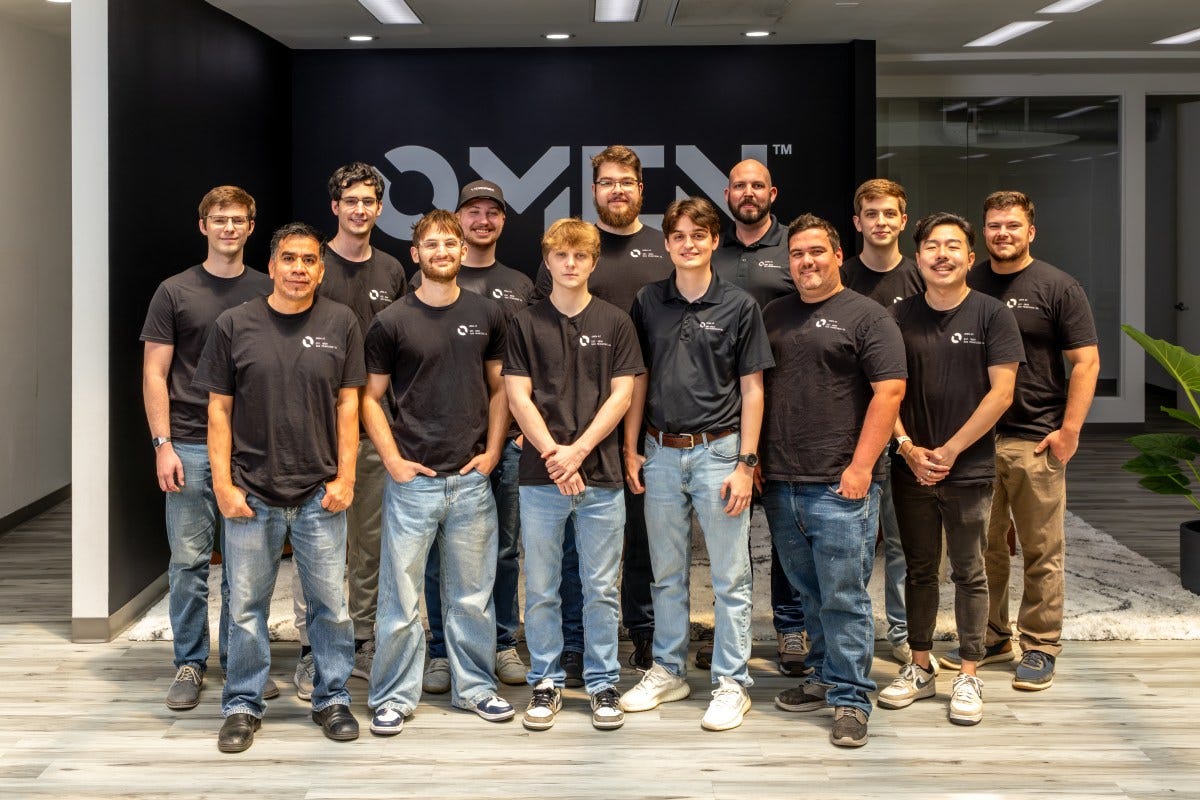
TechCrunch reports that Omen AI raised a $31 million Series A to monitor fluid health inside liquid-cooled data centers. The company’s focus is a small spectrometer that watches coolant chemistry in real time, including bacterial growth that can clog systems when operators increase water content to absorb more heat from hotter-running chips.
The operational detail is the hook. If contamination is discovered late, data center operators may need to flush a system and shut down a rack for five or six hours, potentially costing millions of dollars. Omen CEO and founder Zach Laberge says the goal is to avoid “huge amounts of downtime” caused by having no chemical visibility into coolant systems. The same device can also identify signs of pump wear, such as copper or chromium, or seal wear, such as silicon.
The company began with heavy vehicles and Caterpillar dealerships, then moved toward data centers after customers asked whether its sensor work could apply to turbines, generators, building systems, HVAC, and chip cooling. Omen has raised $40 million since its 2024 founding and says it is working with a dozen data center customers, including TensorWave. TechCrunch notes a competitive caveat: Omen is not alone, as Pyxis has also launched a data-center coolant monitoring product.
Read more: Source
Post of the Week
M.G. Siegler on Om Malik and the need for context
M.G. Siegler | Threads / Spyglass | June 29, 2026
M.G. Siegler writes that beyond the personal sadness of Om Malik’s death, “the world is worse off in losing Om’s voice” just as technology moves deeper into the AI era. The linked Spyglass essay, “Natural Born Bloggers,” is a remembrance of Malik as one of the people who helped professionalize blogging and create a path for writers such as Siegler to move from instinctive online publishing into careers in technology journalism and investing.
The essay’s central memory is not just that Malik was early, but that he brought earned context to the work. Siegler recalls Malik encouraging him even when they were rivals, reading constantly, sending compliments and criticisms, and being “amazingly candid and honest.” He says Malik seemed able to be “both humorously downtrodden and insanely optimistic at the exact same time.”
The AI-era point is why the post belongs this week. Siegler says he is sad not only about Malik’s passing, but about the loss of “his unvarnished opinions” at a moment when AI is “on the verge of upending everything.” His conclusion is that technology now needs Malik’s “voice and pushback” and, especially, his context.
A reminder for new readers. Each week, That Was The Week, includes a collection of selected essays on critical issues in tech, startups, and venture capital.
I choose the articles based on their interest to me. The selections often include viewpoints I can't entirely agree with. I include them if they make me think or add to my knowledge. Click on the headline, the contents section link, or the ‘Read More’ link at the bottom of each piece to go to the original.
I express my point of view in the editorial and the weekly video.


